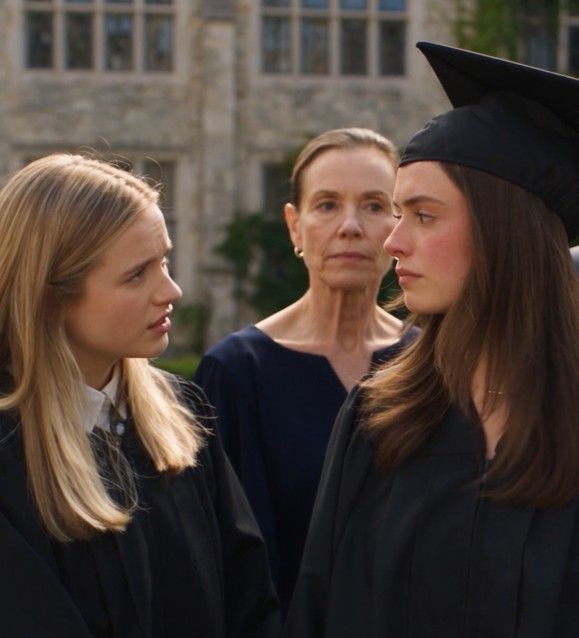
She wrapped both arms around me, careful of the cap I had placed back on my head.
“I am so proud of you,” she whispered.
I closed my eyes.
Those six words did what hundreds of graduation cheers had not. They let me breathe.
My parents were escorted to a nearby administrative building, not arrested, not dragged away, simply separated from me while campus officials documented what had happened. Julian followed them without speaking.
I spent the next hour in a small conference room with Paige, the dean, and a university counselor. My cheek was photographed because the security officer had witnessed the slap. The dean gave me water. Paige refused to let go of my hand.
When I finally walked back outside, most of the crowd had left.
My cap was crooked. My mascara had smudged. My diploma folder was bent at one corner.
It was still mine.
Paige took a picture of me beneath the university seal.
“Smile,” she said.
“I look terrible.”
“You look graduated.”
That made me laugh.
We went to the diner where I had worked breakfast shifts since freshman year. I expected it to be quiet because it was late afternoon.
Instead, the bell over the door rang and every person inside began clapping.
I stopped so abruptly Paige bumped into me.
Mr. Alvarez, the owner, stood behind the counter in his white apron. Two cooks leaned out from the kitchen. My morning regulars had crowded into three booths even though most of them normally disappeared by nine.
“What is this?” I asked.
Mr. Alvarez shrugged. “A graduate needs pancakes.”
I started crying again.
This time nobody pretended not to notice.
The next morning, reality arrived.
I filed an identity theft report, froze my credit, and turned over copies of the documents I had collected. The process was not dramatic. It was forms, phone calls, hold music, certified mail, repeated explanations, and the exhausting work of proving I had not done things that bore my own name.
The slap had happened in seconds. Repair took months.
My parents hired an attorney and stopped contacting me directly. Through him, they first claimed the education account had been family money. Records proved otherwise. My grandfather had named me as the beneficiary, and the withdrawal required my authorization after I turned eighteen. The signature was not mine.
Then they argued the money sent to Julian had been temporary. Julian’s company records showed it had paid for a leased car, travel, equipment he later sold, and personal expenses during the year my parents told relatives I was too irresponsible to remain in school.
The disputed loan was worse.
My mother had supplied the personal information. My father had approved the transfer. Julian had received most of the proceeds.
For weeks, I expected Julian to maintain that he knew nothing.
