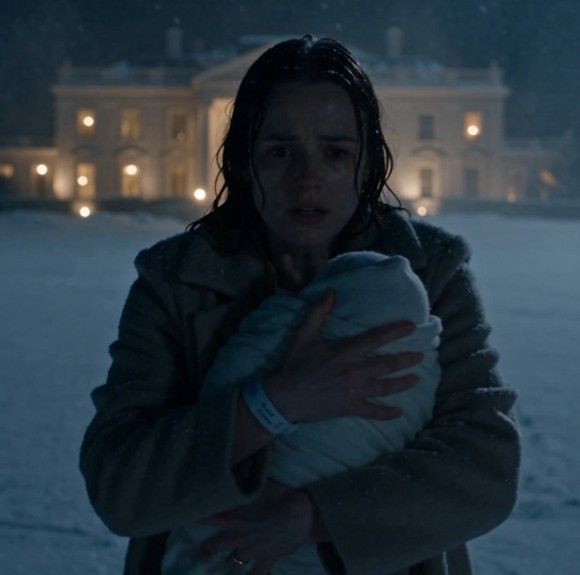
But so had a future nobody else was entitled to administer for her.
Claire closed the door against the cold and watched her daughter tug at her great-grandfather’s scarf.
Outside, snow covered the road again.
Inside, nothing belonged to anyone by permission except Claire herself.
Later that evening, after her grandfather went home, Claire stood alone in the quiet apartment and opened the drawer where she kept the recovered Mercedes keys. She had the car back, but she had not driven it yet.
For weeks, seeing the silver emblem made her remember Vanessa on the staircase and the humiliation of asking for something that already belonged to her.
The next morning, she carried Lily downstairs, strapped the infant into the car seat, and sat behind the wheel.
Her hands shook.
Nothing was wrong with the car. The fear belonged to the memory.
Claire started the engine anyway.
She drove three blocks to a bakery, bought one coffee and one blueberry muffin, then sat in the parking lot laughing at how ordinary the trip was.
Ownership, she realized, was not the key in her hand. It was using something without waiting for permission from the people who had convinced her it was theirs to grant.
When she returned, she found a message from her grandfather asking whether she needed a ride to Lily’s appointment.
Claire typed back: I have my car.
Three dots appeared, then disappeared.
His reply came a moment later.
Of course you do.
She saved that message.
Not because the Mercedes mattered so much anymore, but because the sentence contained none of the old family grammar. No explanation. No condition. No reminder of who had paid.
Just recognition.
Months later, Claire stopped saving messages like that because respect no longer felt rare enough to archive. That change pleased her more than the recovered money. Safety had become boring. Choice had become routine. And routine, after years of manufactured dependence, felt almost luxurious.
