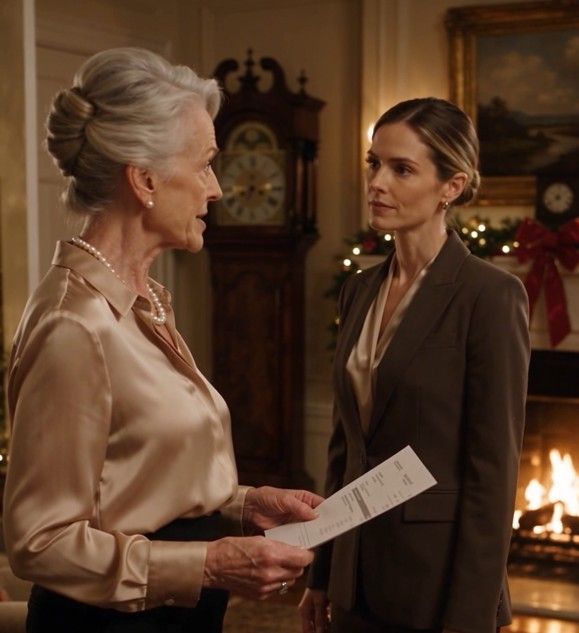
After Christmas, the caterer contacted Priscilla directly regarding the signed contract. Because the event had been canceled within the penalty window, the company kept a portion of the deposit but reversed the remainder to Sylvia’s card after reviewing the disputed charge. The rental company canceled before delivery and billed Priscilla a fee. The wine merchant reversed the purchase because the order had not been picked up. The florist kept the amount tied to the already purchased flowers, which Sylvia accepted because she had deliberately redirected them.
Priscilla and Dean owed the remaining cancellation fees themselves.
Dean sold a set of golf clubs he rarely used and covered half. Priscilla used money from a personal savings account for the rest.
Sylvia heard about that from Dean, not because she asked, but because he wanted her to know he had not come looking for another rescue.
Two weeks later, Priscilla requested to meet.
They sat in Sylvia’s kitchen at the same table where the brochure-sized catering invoice had started the confrontation. Priscilla looked different without the armor of an event to manage. Tired. Defensive. Human.
“I was wrong to use the card,” she said.
Sylvia waited.
Priscilla swallowed. “And I was wrong to assume you would pay because you had paid before.”
“That is closer.”
“I thought I was doing something for the family.”
“You were also doing something to me.”
Priscilla’s eyes dropped.
“I know.”
Sylvia folded her hands. “Do you?”
“I do now.”
The apology was not perfect. It contained explanations Sylvia did not need and shame Priscilla tried to disguise as irritation. But it also contained something new: no request for money, no demand for immediate forgiveness, no accusation that Sylvia had ruined Christmas.
So Sylvia accepted the apology for what it was and refused to turn it into more.
“I am willing to move forward,” she said. “That does not mean we return to the old arrangement.”
Priscilla nodded.
“No one stores my card information. No one makes plans in my house without asking me. If I offer to pay, I will say so. If I do not offer, the answer is not hidden inside the word family.”
Priscilla’s mouth tightened at that, but she nodded again.
Dean kept his spare key off his ring.
For the next several months, he called before visiting. Sometimes that formality made Sylvia sad. More often, it made the visits feel chosen on both sides.
Something else changed too. The family began rotating holidays. Easter went to Marie’s house. A summer birthday happened at a public park, with everyone bringing food. Thanksgiving became Dean and Priscilla’s responsibility, and when Priscilla asked Sylvia to make her sweet potatoes, she asked only for the dish, not the grocery money, serving bowls, flowers, or rescue plan.
Sylvia brought the sweet potatoes.
She also brought herself.
In early December, almost a year after the argument, Sylvia received a handwritten envelope from the rehabilitation center. Inside was a note from Marjorie, who had returned for physical therapy after another procedure.
You will laugh, she had written, but everyone still talks about those Christmas flowers. One woman took a single white rose back to her room and kept it in a water glass for nearly two weeks. She said it was the first thing that made the room feel like someone remembered her.
Sylvia sat at her kitchen table with the note resting beside her teacup.
