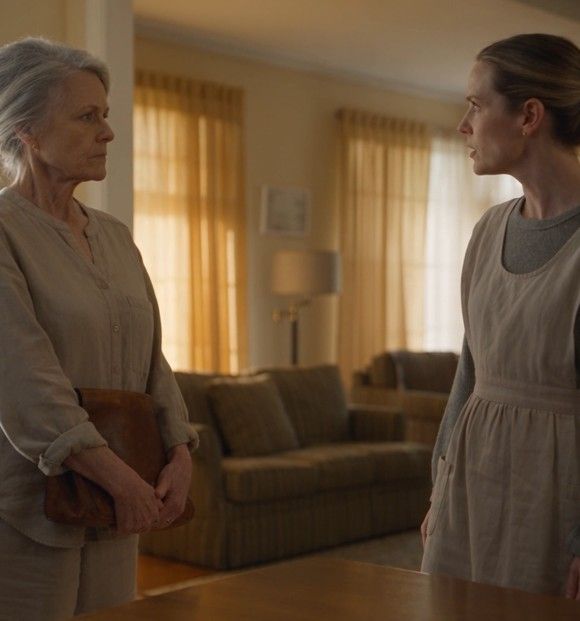
Michelle’s hand remained suspended above the folder. Eleanor watched the confidence drain from her daughter-in-law’s face as the word deed became impossible to ignore. David rose halfway from the sofa, then sat again, as though even standing required choosing a side he had avoided choosing for years.
The person Michelle had been speaking to before Eleanor entered was a home-care assessor. Michelle had invited her to discuss whether Eleanor was becoming too confused to manage her affairs. The assessor looked from Michelle to the documents and immediately asked Eleanor whether she wanted the meeting to continue. Eleanor said yes, but not for the reason Michelle expected.
Rebecca arrived five minutes later with attorney Samuel Price, the appointment Eleanor had scheduled before returning home. Ernest had used Price’s firm years earlier for estate planning. Eleanor had spent the previous day confirming every document in the faded folder against county records.
Price placed certified copies on the table. The house remained titled solely to Eleanor after Ernest’s death. No transfer to David had ever occurred. No life-estate arrangement gave Michelle control. The simple fact was devastating because Michelle’s authority had depended on everyone behaving as if it were already legal.
Michelle insisted that she and David had paid expenses and improved the property. Eleanor did not deny that they had contributed to groceries and some repairs. She also produced bank statements showing that property taxes, insurance, major maintenance, and the mortgage payoff had come from Eleanor and Ernest’s accounts.
David finally whispered, “Mom, why didn’t you tell me you were doing this?” Eleanor looked at him for a long moment. She reminded him that three nights earlier he had watched his wife order her to cancel a date and clean the kitchen in front of thirty people. He had not asked Michelle why she was doing that.
The sentence hurt him because it was precise. Eleanor did not shout. She had shouted inside herself for years. What she needed now was not volume but a boundary nobody could reinterpret later.
Price explained that Eleanor had already signed a formal notice ending the informal living arrangement. David and Michelle would have a lawful period to relocate. Eleanor was not throwing anyone into the street that afternoon, but the master bedroom would no longer belong to them, the study would be returned to Eleanor, and no one was authorized to represent her as cognitively impaired without her consent.
The assessor closed her notebook. She had heard enough to understand that the request for evaluation had not originated with Eleanor. She told Michelle she would document that fact. Michelle’s face reddened. Her attempt to make Eleanor appear incapable had created an independent record of Eleanor speaking clearly, understanding her property, and exercising her own choices.
Over the next week, the house became painfully quiet. Michelle alternated between anger and sudden sweetness. Eleanor recognized both as forms of pressure. She stayed with Rebecca until the locks on the study were changed and an inventory of her papers was completed.
Inside the study, they found more than family photographs and old tax returns. A folder contained draft forms Michelle had printed for a power of attorney. Eleanor’s name was typed on them, but she had never signed them. There were also notes about selling the house after “placement,” a word that made Eleanor sit down in Ernest’s old desk chair and stare at the wall.
David claimed he had never seen the forms. Eleanor believed that he might be telling the truth, but innocence did not erase his long habit of looking away. She told him the most painful part was not that Michelle wanted control. It was that her son had made control easy by refusing to notice what it cost his mother.
David moved into a small apartment before the notice period ended. He did not ask Eleanor to forgive him immediately. For once, he accepted an uncomfortable consequence without demanding that she soften it for him.
Michelle moved in with her sister. Her marriage to David did not survive the months that followed. When David refused to challenge Eleanor’s ownership or support a claim that she lacked capacity, Michelle accused him of betrayal. He answered that he had already betrayed one person by remaining silent too long.
Eleanor did not celebrate their separation. She had learned that another person’s collapse was not the same thing as her healing. She focused instead on returning the house to a shape that felt like hers.
The laundry room was the first place she changed. For years it had contained the narrow daybed where she slept so David and Michelle could use the master bedroom. She removed the bed, repainted the walls, and turned the space back into what it had been: a bright utility room with shelves for linens and a small table for folding clothes.
The master bedroom was harder. Ernest’s side of the closet still held an old cedar scent. Eleanor stood there one morning with his brown leather purse on the bed and allowed herself to grieve not only her husband, but the version of herself who had believed love required endless accommodation.
Rebecca helped her choose new curtains. They were not expensive. That was why Eleanor liked them. Every major decision in the house had begun to feel like a referendum on money and ownership. The curtains were simply blue because she wanted blue.
David began visiting on Sundays, but only after calling first. The first several visits were awkward. He washed his own coffee cup. He asked before entering the study. Small courtesies that should have been ordinary became evidence that he was learning to see his mother as a person rather than a permanent source of space, labor, and forgiveness.
One afternoon he brought a box from storage. Inside were photographs from Eleanor and Ernest’s thirtieth anniversary. In one picture Ernest was handing her the brown leather purse. David had been standing behind them, laughing at something outside the frame.
David apologized again. This time he did not explain himself. He did not say Michelle was difficult or that work had been stressful. He said he had benefited from Eleanor’s silence, so he had mistaken that silence for consent.
Eleanor told him forgiveness would be a process, not a reward for finally finding the correct words. David nodded. That answer, more than his apology, allowed her to believe he might be changing.
The legal matter ended quietly. Because the unsigned power-of-attorney forms had never been used, Eleanor chose not to pursue claims beyond ensuring her records and property were protected. Price helped her update her estate plan so no future ambiguity could be exploited.
She also made a decision that surprised David. The house would not automatically pass to him. Eleanor created a trust that allowed her to live there for the rest of her life and directed part of the eventual value to a local program helping older adults obtain independent legal advice when family members pressured them over housing or money.
David looked stricken when she told him, then caught himself. “It’s your house,” he said. Eleanor smiled because, finally, he had said the sentence without resentment.
Months later, Eleanor went on the date Michelle had ordered her to cancel. His name was Thomas, a retired music teacher Rebecca had known for years. Eleanor told him the truth about why the first invitation had become important to her. Thomas did not turn it into a grand romance. He simply listened, ordered dessert, and asked whether she wanted to hear a terrible joke.
She laughed harder than the joke deserved.
The beautiful surprise arrived near Christmas. David asked if he could bring something to the house. He carried in Ernest’s old wooden sign from the garage, the one that had once hung beside the kitchen door. Eleanor had forgotten it existed. Ernest had carved their surname into it and, underneath, the words HOME IS WHERE YOU ARE HEARD.
David had cleaned the wood but left every scratch. He asked Eleanor where she wanted it. She chose the hallway outside the study—the room Michelle had once controlled and the room where Eleanor now kept her papers in an unlocked desk because the locks were no longer being used against her.
At Christmas dinner, there were fewer people than before. Rebecca came. Thomas came. David came alone and brought pie. Nobody ordered Eleanor into the kitchen. Nobody joked about her memory. When plates needed clearing, everyone stood.
