“Mama,” she said clearly.
Her first word.
I pressed my face into her soft hair and cried.
Not from sadness.
From overwhelming, impossible joy.
That night, after Sophie was asleep, I stood on the porch and looked up at the stars.
Somewhere, Richard was in a prison cell.
Somewhere, my mother was paying for what she’d done.
But here, in this quiet corner of Vermont, I was free.
Free to love my daughter.
Free to build a life that mattered.
Free to be enough, just as I was.
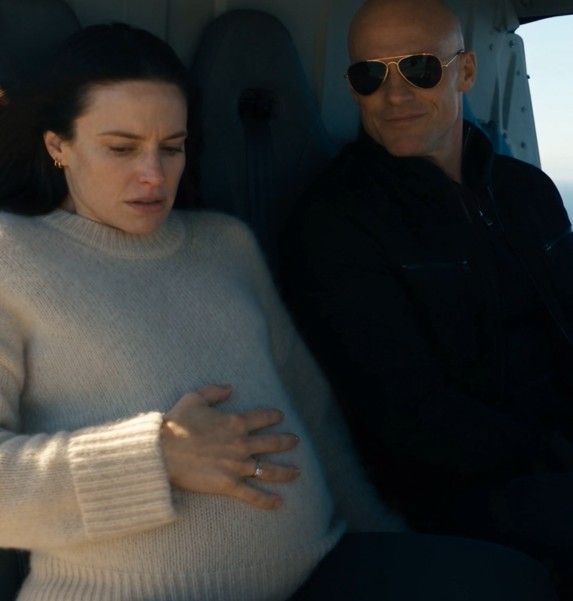
I thought about the woman I’d been two years ago. The woman who’d fallen from a helicopter, terrified and betrayed.
She felt like someone else now.
Someone I’d had to lose in order to become who I was meant to be.
“Thank you,” I whispered into the night, to no one and everyone. To myself. To fate. To whatever force had decided I deserved to survive.
Behind me, the door opened.
Mrs. Chen, the nanny, stepped out with a cup of tea.
“Thought you might want this,” she said with a kind smile.
“Thank you.”
She stood beside me for a moment, looking out at the mountains.
“You’ve built a good life here,” she said. “Sophie’s lucky to have you.”
“I’m the lucky one.”
Mrs. Chen patted my shoulder and went back inside.
I sipped the tea and let the warmth spread through me.
Somewhere in the house, Sophie made a small sound in her sleep.
And I smiled.
Because this—this quiet, ordinary moment—was everything I’d fought for.
Everything I’d survived for.
This was home.
Two years later.
Sophie was three years old, bright and curious and fearless.
She loved books and bugs and helping me in the garden.
She asked a million questions a day, and I answered every single one.
We had friends now. Other families in town. Playdates and birthday parties and normal, beautiful chaos.
Evelyn visited every month, and sometimes she stayed for weeks.
Katherine came twice a year, always bringing gifts for Sophie and updates on the company.
My fortune had rebuilt itself. Not through Richard’s stolen money—that stayed in trust—but through my own investments and work.
I was wealthy again.
But I didn’t live like I used to.
No mansion. No staff of dozens. No desperate need to prove anything to anyone.
Just a farmhouse. A garden. A daughter.
And it was enough.
More than enough.
One afternoon in spring, Sophie and I were planting flowers when she looked up at me with dirt on her nose.
“Mama, where’s my daddy?”
I’d been preparing for this question for three years.
I set down my trowel and pulled her into my lap.
“Your daddy made some very bad choices,” I said carefully. “And because of those choices, he can’t be with us.”
“Did he hurt you?”
