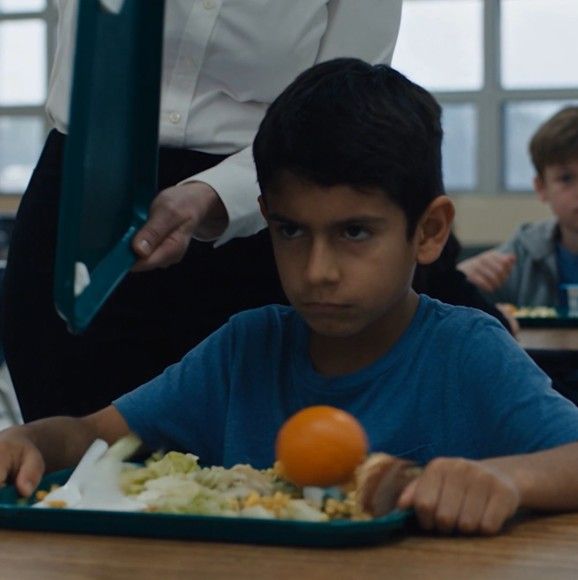
“That is exactly what I mean.”
“No,” the principal said. “It isn’t.”
For the first time, Mrs. Kessler looked uncertain.
The principal asked whether she had been deliberately holding current payments instead of posting them.
Mrs. Kessler called it a verification process.
The secretary asked where the written policy for that process was.
There was none.
Then the girl from the office appeared at the cafeteria door with her empty envelope. She had followed at a distance with the fourth-grade boy.
“My dad put twenty dollars in mine,” she said.
The secretary matched her name to the deposit worksheet. Twenty dollars had been included in the cash total.
Her account still showed zero.
The principal’s voice became very quiet.
“You accepted the payment.”
Mrs. Kessler said nothing.
“You included it in the school deposit.”
Still nothing.
“But you did not credit the child’s account, and then you denied her a meal.”
Mrs. Kessler lifted her chin. “Families need to understand that lunch accounts are not optional. If we keep rescuing them, they never become responsible.”
Mateo felt Mr. Bell’s hand settle lightly on the back of the chair beside him, not touching Mateo, just close enough to remind him that an adult was still there.
The principal looked at the yellow pad.
“These children are not responsible for teaching their parents a lesson.”
Mrs. Kessler said she had been trying to protect the program from unpaid balances.
The principal asked whether throwing away a child’s food protected the program.
That was when Mrs. Kessler stopped explaining.
She was told to hand over her keys.
The sentence was simple. No shouting. No dramatic announcement.
Yet Mateo watched the cafeteria supervisor remove the ring from her belt and place it on the desk beside the yellow pad, and he understood that something had changed permanently.
The principal closed the cafeteria office and took the children back upstairs.
Then she called their parents.
Mateo asked if she had to call his mother at work.
