“Testing.”
“Still here.”
That exchange became our private joke.
School was another place where the consequences surfaced quietly. For several weeks, I panicked whenever a teacher closed a classroom door after recess. I stopped asking to go outside at lunch even when my friends were playing in the snow. My teacher, Mrs. Harmon, noticed before I could explain it. She did not make me tell the class anything. She simply moved my desk where I could see the hallway, told me I could ask to step out if a closed room felt frightening, and checked in with Grandma at pickup. Those accommodations faded as I became comfortable again, but knowing I was allowed to ask mattered.
My father also had to face people who had seen pieces of the problem and said nothing. One neighbor remembered hearing me knock on the balcony door but assumed an adult was nearby. A relative admitted Karen often criticized me at family dinners and everyone called it strict parenting. Nobody could change the night, but several adults apologized for the way they had normalized her tone. My therapist helped me understand that their guilt was not mine to manage.
Dad began attending a parenting group recommended by the child services worker. At first he hated it. He said sitting in a circle with strangers discussing mistakes made him feel as though he had been labeled a bad father forever. Grandma told him feeling uncomfortable was cheaper than making me carry the lesson for him. He went back the next week.
Months later, I overheard him tell another parent, “Providing a house is not the same as knowing what is happening inside it.” I did not tell him I had heard. I just went upstairs and put the silver phone on the charger.
The charger itself became a ritual. Every Sunday evening, Grandma and I checked the battery together. Sometimes the screen barely lit. Sometimes we had to wiggle the cord. Dad offered to buy me a newer emergency phone, but I refused for a long time. The scratches on the silver case felt like my mother’s fingerprints even though I knew that was not literally true. Eventually we bought a modern phone for daily use, and the old one remained charged in the drawer. It stopped being my only exit. That was progress too.
The first winter after Karen left was difficult.
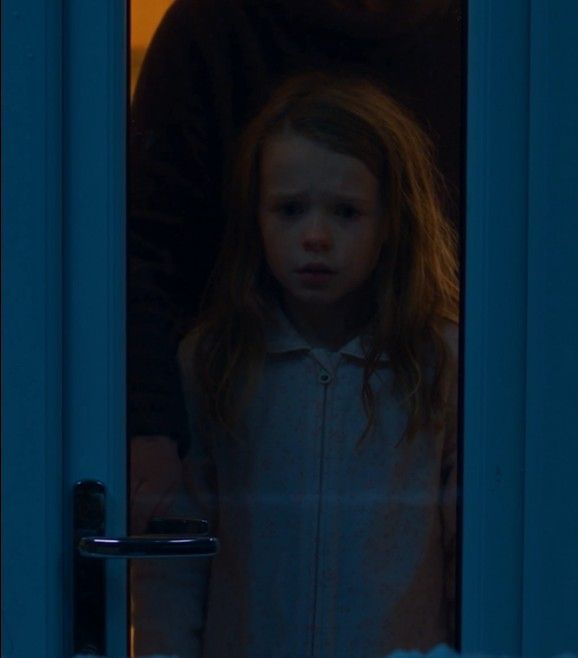
The first truly cold night made my hands ache with remembered fear. I stood inside the warm living room staring at the balcony door.
My father noticed.
He did not tell me the door was safe.
He walked over, unlocked it, opened it for three seconds, then closed it again.
“Your choice,” he said. “Open or closed.”
I locked it myself.
That small click sounded different when my hand made it.
Safety became ordinary enough that I sometimes forgot to notice it.
Years passed.
I stopped sleeping with the phone under my pillow. Then I stopped checking the balcony lock twice. Then, one winter, I realized snow had started and I had not thought about the old night at all until Grandma mentioned the weather.
Healing was full of those quiet absences.
At sixteen, I asked my father why he had kept the balcony instead of replacing the door.
“I almost did,” he said. “But your therapist told me to ask you first. You said no.”
I had forgotten.
“Why did I say no?”
He smiled sadly.
“You said you did not want Karen to own part of the house forever.”
That sounded like me.
By then, my father had become the parent who asked first.
He never remarried while I was growing up. I once asked whether that was because of me.
“No,” he said. “It is because I learned that being lonely is not an emergency.”
