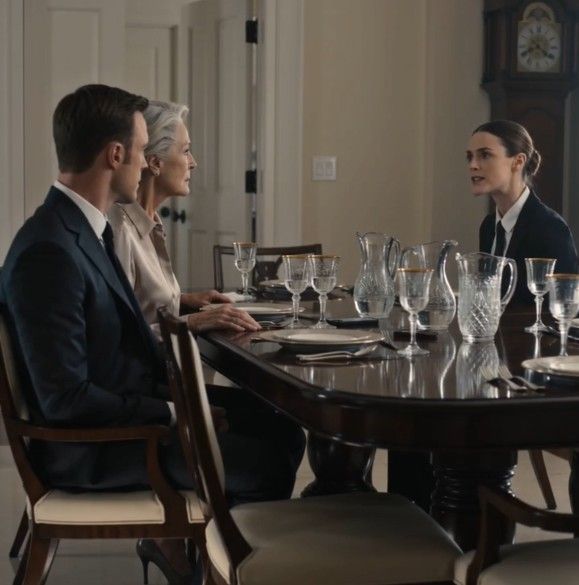
She refused the invitation to argue about whether anyone had meant well. Intention could be discussed, she said, but it did not change what had been demanded or how little choice she had been given. A factual answer mattered more than a polished explanation, and she waited until the two could be separated, a choice that mattered during confrontation as she considered locked door and key from a new angle 2-1.
That distinction landed harder than shouting would have. Laura could dispute feelings, but the documented sequence left less room to rewrite what had happened. The longer the discussion continued, the clearer it became that certainty had been doing work that evidence should have done from the beginning, a choice that mattered during confrontation as she considered locked door and key from a new angle 3-1.
Margaret named the consequence plainly: the disputed decision would not stand, and any future arrangement would have to be explicit before money, property, access, or obligation changed hands. Margaret did not need to prove anyone monstrous in order to prove that the arrangement was unacceptable, a choice that mattered during confrontation as she considered locked door and key from a new angle 4-1.
Daniel rejected Laura’s attempt to turn an insult into authority and insisted that the key, access, and decisions about Margaret’s property be returned immediately. That realization gave her room to be precise instead of cruel, a choice that mattered during consequence as she considered locked door and key from a new angle 1-1.
The room did not erupt. Instead, certainty drained away in small visible ways: a hand withdrawn from the papers, an unfinished sentence, a glance that no longer held the same authority. Even when the conversation became personal, she returned to dates, words, choices, and the boundaries that had actually been crossed, a choice that mattered during consequence as she considered locked door and key from a new angle 2-1.
Margaret gathered only what belonged to her. She did not take anything to punish someone else, and she did not leave behind anything that could later be described as consent. The method frustrated people who wanted a faster emotional resolution, but it protected her from agreeing to something merely to end the scene, a choice that mattered during consequence as she considered locked door and key from a new angle 3-1.
Before the conversation ended, she asked for the practical next steps in writing. The request sounded almost mundane, but it prevented the evening from being rewritten after everyone went home. For once, silence belonged to her rather than to the person waiting for her surrender, a choice that mattered during consequence as she considered locked door and key from a new angle 4-1.
Later, away from the confrontation, Margaret discovered that relief did not arrive as triumph. It came in uneven waves: fatigue first, then anger, then the strange quiet of realizing how long she had adapted to pressure. Margaret let the other person finish before responding, because interruption would have made it easier for the real question to disappear inside another argument, a choice that mattered during processing as she considered locked door and key from a new angle 1-1.
She wrote down the sequence while it was fresh. Not to build a case against a family member, but to keep herself from minimizing the experience once the immediate pain faded. Nothing about her restraint meant she was uncertain; it meant she had finally stopped confusing urgency with truth, a choice that mattered during processing as she considered locked door and key from a new angle 2-1.
A trusted person listened without turning the story into spectacle. That conversation helped Margaret see that boundaries were not revenge; they were instructions for how closeness could continue without erasing her. The difference between a request and a command became impossible to ignore once she asked what would happen if she simply said no, a choice that mattered during processing as she considered locked door and key from a new angle 3-1.
Over the following days, she made practical changes. Access, records, expectations, and future conversations would no longer depend on memory or on whoever spoke most confidently. Margaret noticed how quickly old family habits tried to return, especially the expectation that discomfort should be solved by the person who had been hurt, a choice that mattered during processing as she considered locked door and key from a new angle 4-1.
Margaret documented what had happened, restored control over her belongings, and accepted Daniel’s help only on terms she chose herself. This time she did not volunteer to carry that discomfort for everyone else, a choice that mattered during healing as she considered locked door and key from a new angle 1-1.
There were awkward conversations after that. Some apologies arrived incomplete. Some needed time before they sounded like responsibility rather than an attempt to restore comfort. A factual answer mattered more than a polished explanation, and she waited until the two could be separated, a choice that mattered during healing as she considered locked door and key from a new angle 2-1.
Margaret stopped measuring reconciliation by how quickly everyone could sit in the same room again. She measured it by whether her no remained a complete sentence and whether questions were answered without punishment. The longer the discussion continued, the clearer it became that certainty had been doing work that evidence should have done from the beginning, a choice that mattered during healing as she considered locked door and key from a new angle 3-1.
That slower standard made room for something healthier than the old peace. It allowed affection where affection was possible and distance where distance was still necessary. Margaret did not need to prove anyone monstrous in order to prove that the arrangement was unacceptable, a choice that mattered during healing as she considered locked door and key from a new angle 4-1.
Months later, an earlier detail returned with a meaning Margaret had not expected. It did not erase the confrontation; it placed her courage inside a longer story. That realization gave her room to be precise instead of cruel, a choice that mattered during beautiful twist as she considered locked door and key from a new angle 1-1.
Among the recovered papers was a short handwritten list Margaret had made years earlier about the kind of home she wanted in old age: doors open, choices respected, family welcomed but never entitled. Even when the conversation became personal, she returned to dates, words, choices, and the boundaries that had actually been crossed, a choice that mattered during beautiful twist as she considered locked door and key from a new angle 2-1.
She held that discovery quietly. There was no need to use it as a weapon. Its value was private: proof that the part of her that resisted control had not appeared suddenly that night. The method frustrated people who wanted a faster emotional resolution, but it protected her from agreeing to something merely to end the scene, a choice that mattered during beautiful twist as she considered locked door and key from a new angle 3-1.
The realization softened something without weakening the boundary. She could remember what had been good, grieve what had been distorted, and still choose differently now. For once, silence belonged to her rather than to the person waiting for her surrender, a choice that mattered during beautiful twist as she considered locked door and key from a new angle 4-1.
By then, the practical dispute had been resolved. More importantly, Margaret no longer needed another person’s agreement to recognize what had happened. Margaret let the other person finish before responding, because interruption would have made it easier for the real question to disappear inside another argument, a choice that mattered during peace as she considered locked door and key from a new angle 1-1.
The relationships that survived did so with clearer edges. The ones that changed were allowed to change without being forced back into their old shape. Nothing about her restraint meant she was uncertain; it meant she had finally stopped confusing urgency with truth, a choice that mattered during peace as she considered locked door and key from a new angle 2-1.
Margaret found herself noticing ordinary things again without using them to endure a confrontation: light on a floor, the sound of a kettle, a door opening because someone had chosen to open it. The difference between a request and a command became impossible to ignore once she asked what would happen if she simply said no, a choice that mattered during peace as she considered locked door and key from a new angle 3-1.
Margaret left the recovered key in a small ceramic dish by her own doorway and went to bed that night without hearing a lock turn anywhere in the house. Margaret noticed how quickly old family habits tried to return, especially the expectation that discomfort should be solved by the person who had been hurt, a choice that mattered during peace as she considered locked door and key from a new angle 4-1.
The next part of Margaret’s recovery on day 1 was deliberately ordinary. On day 1, she chose one practical task connected to the dispute and completed it without asking Laura to validate the choice. On that day 1, she checked what could be checked, wrote down what needed to be remembered, and left unanswered questions unanswered until reliable information existed. That day 1 mattered because Laura’s claim that confinement was protection had once been presented as an emergency. By moving carefully on day 1, she proved to herself that urgency did not own her decisions. On day 1, she could act with compassion without surrendering judgment, and she could leave a conversation unfinished rather than purchase temporary peace with a promise she did not mean. Each small decision on day 1 made the next one easier, not because the past vanished, but because her present choices finally belonged to her.
The next part of Margaret’s recovery on day 2 was deliberately ordinary. On day 2, she chose one practical task connected to the dispute and completed it without asking Laura to validate the choice. On that day 2, she checked what could be checked, wrote down what needed to be remembered, and left unanswered questions unanswered until reliable information existed. That day 2 mattered because Laura’s claim that confinement was protection had once been presented as an emergency. By moving carefully on day 2, she proved to herself that urgency did not own her decisions. On day 2, she could act with compassion without surrendering judgment, and she could leave a conversation unfinished rather than purchase temporary peace with a promise she did not mean. Each small decision on day 2 made the next one easier, not because the past vanished, but because her present choices finally belonged to her.
The next part of Margaret’s recovery on day 3 was deliberately ordinary. On day 3, she chose one practical task connected to the dispute and completed it without asking Laura to validate the choice. On that day 3, she checked what could be checked, wrote down what needed to be remembered, and left unanswered questions unanswered until reliable information existed. That day 3 mattered because Laura’s claim that confinement was protection had once been presented as an emergency. By moving carefully on day 3, she proved to herself that urgency did not own her decisions. On day 3, she could act with compassion without surrendering judgment, and she could leave a conversation unfinished rather than purchase temporary peace with a promise she did not mean. Each small decision on day 3 made the next one easier, not because the past vanished, but because her present choices finally belonged to her.
