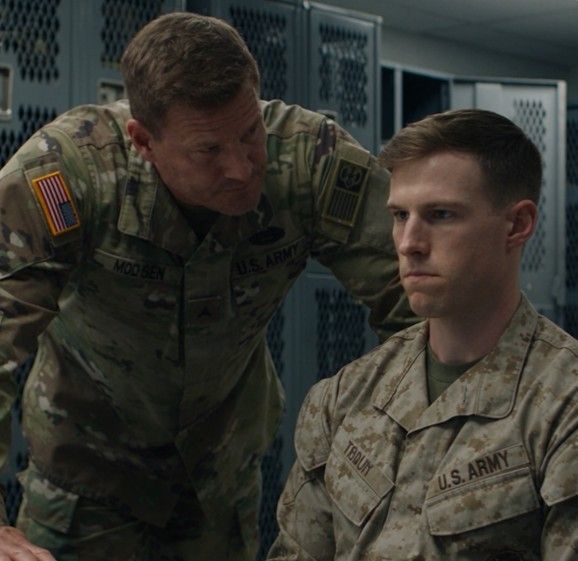
That honesty made the lesson easier to remember. It also made the old accusation feel less like a scar he had to hide and more like practical knowledge he could use to protect someone else later.
Months later, Jordan was promoted. The ceremony was small. Harlan pinned the new rank on his uniform, then stepped back.
Afterward, Harlan handed him a thin folder.
“What’s this?”
“Updated cage procedures.”
Jordan groaned. “That is your promotion gift?”
“Page four.”
Jordan opened it.
At the bottom of the page was a new line in bold:
ACCESS LOGS INDICATE CREDENTIAL USE. THEY DO NOT, BY THEMSELVES, IDENTIFY THE PERSON USING THE CREDENTIAL.
Jordan read it twice.
His throat tightened.
“You wrote this?”
“You did,” Harlan said. “In that first meeting. I just made sure nobody edited it out.”
Jordan closed the folder.
That was the beautiful twist he had not expected. The worst sentence of his accusation—your card wasn’t asleep—had turned into a permanent warning against making the same mistake with someone else.
Years later, soldiers Jordan had never met would read that line during training and never know why it existed.
He liked that.
On his last day in that supply room before transferring, Jordan emptied his desk and found the original printed image from the security camera in an old case file copy. A grainy figure. Right-wrist watch. Small patch.
For a second, the photograph pulled him back to the table, the vest between them, Harlan asking where the other six were.
Then Jordan noticed something else.
His own reflection in the dark computer screen.
Different rank. Same face people had once compared to his father’s.
He no longer flinched at the resemblance.
A face was not evidence.
A name was not destiny.
He fed the duplicate photo into the shred bin, checked that the official record remained properly archived, and picked up his wallet from the desk.
The access card was inside.
He did not open the wallet to make sure.
He already knew, without checking again.
