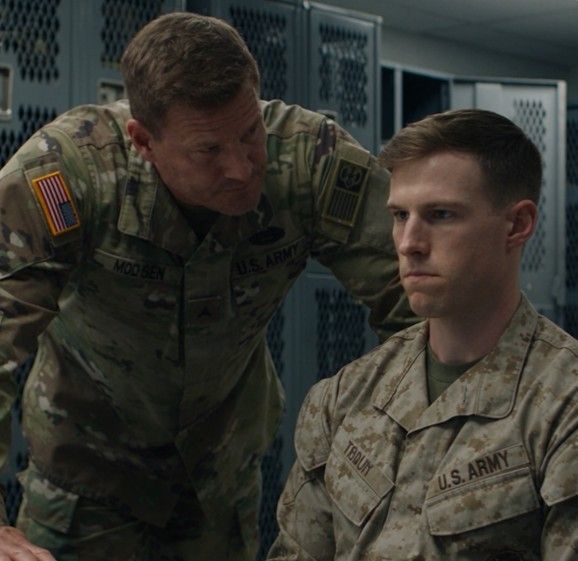
The investigator considered that.
Jordan expected another explanation about procedure. Instead the man said, “That is fair.”
The review added guidance requiring investigators to distinguish clearly between verified evidence, investigative hypotheses, and background facts that might never prove relevant. It sounded bureaucratic. Jordan had learned not to dismiss bureaucratic language when it determined how a frightened person was treated on the worst day of his life.
He also learned more about Pierce’s method. The temporary encoder had not been capable of creating an identical physical card, but it could program a spare credential with copied access data. Pierce had tested the copy on an exterior reader days before the theft, producing a log entry nobody noticed because it happened during normal hours. On the night of the theft, he used the copied credential, wore the old exercise patch because he knew cameras would see a familiar logistics identifier, and relied on the cap and poor lighting to blur everything else.
The plan was careful until it was not.
Pierce used his own dispatch authority to move the truck. He kept the distinctive watch. He retained the duplicate credential instead of destroying it. He rented storage through a relative close enough to connect back to him. Like many schemes, it worked only as long as investigators accepted the first plausible story and stopped looking.
Jordan wrote that sentence in his notebook.
The first plausible story is not the same as the true one.
He used it later when training new supply clerks.
One private asked whether Jordan now distrusted electronic logs.
“No,” Jordan said. “Logs are evidence. They are excellent evidence. But they tell you what a system recorded, not every fact surrounding it.”
“So what do we trust?”
“More than one thing.”
The answer sounded simple. The experience behind it was not.
Harlan eventually told Jordan why the patch had frightened him so badly. Pierce had been Harlan’s recommendation for the logistics response team.
“I put his name on the roster,” Harlan said.
“You didn’t tell him to steal vests.”
“No. But I vouched for him.”
Jordan recognized the familiar temptation to turn another person’s choices into a verdict on yourself.
“You told me not to do that with my father,” he said.
Harlan raised an eyebrow. “I said a lot of stupid things to you that day.”
“You eventually said one useful thing.”
“Which one?”
Jordan almost smiled. “I’ll let you wonder.”
Harlan accepted that.
Their relationship never became sentimental. Jordan did not need it to. Trust returned in practical increments: a fair evaluation, a corrected report, an admission made without being forced, a decision to check facts before speaking. That was enough.
When Jordan later took over a larger supply section, he kept one habit from the incident. Any time a discrepancy appeared, he wrote three headings on a whiteboard before anyone named a suspect: WHAT WE KNOW, WHAT WE THINK, WHAT WE NEED TO CHECK.
The soldiers teased him about it until the method saved them from blaming a driver for equipment that had been misrouted under the wrong pallet number.
After that, nobody erased the headings.
Jordan never presented the method as wisdom he had possessed all along. He told them exactly where it came from: a morning when a log looked conclusive, a photograph looked worse, and one small patch forced everyone to admit they had more questions than answers.
