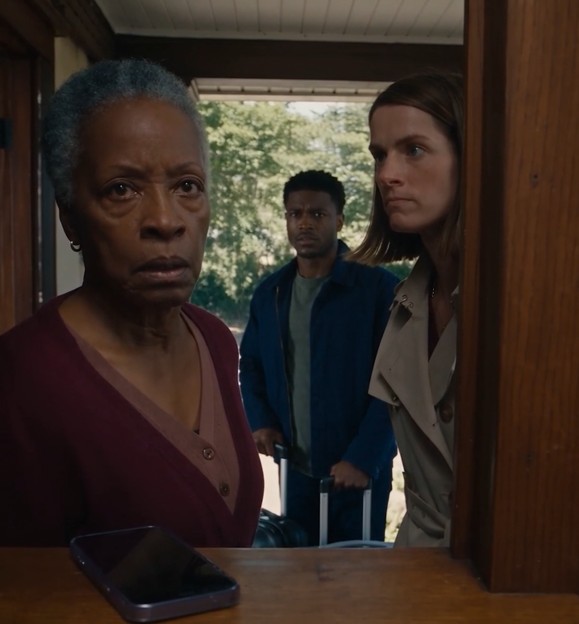
Instead, I said, “A receipt, please.”
Delaney eventually pleaded guilty to offenses arising from the forged release and the assault. At sentencing, the prosecutor described the threat at my door and the false statement about my capacity. Delaney could no longer dismiss them as a family disagreement; they were supported by documents, testimony, and her own messages.
She received a prison sentence, followed by supervision. The court entered a no-contact order. The judgment and restitution obligations remained hers to carry. Marcus had filed for divorce, and their property settlement was completed before she began serving her sentence.
When Delaney was asked whether she wanted to speak, she read from a page about stress and poor judgment.
I waited for her to turn toward me.
She never did.
Her acknowledgment had once seemed necessary to my recovery. Watching her fold that paper, I understood I might never receive it. The officers led her away, and the room remained steady without it.
Marcus pleaded guilty for his own role. His documented cooperation, admission, and repayment were considered at sentencing. He received probation, community service, and a criminal record.
I attended his hearing too.
He did not ask me to speak for him.
Afterward, he stood across the courthouse corridor, holding a folder against his chest like a schoolboy with a damaged report card. I disliked the comparison as soon as it came. He was a man. Remembering that was part of loving him honestly.
“I’m sorry,” he said.
“I know you are.”
“Is there anything I can do?”
“Keep being sorry when nobody is watching. Make it change something.”
He nodded. I went home with Ruth.
The quiet afterward was harder than I expected. For months, every envelope had carried a possible answer. Now the case was finished, and I still sometimes found myself standing in the hallway, listening.
A counselor named Mrs. Bell helped me stop treating that reaction as a personal failure.
“You were hurt in the place where you expected safety,” she said.
“I keep thinking I should have seen who he was.”
“You saw someone you loved. He was responsible for what he kept from you.”
I repeated that in the car before turning the key.
Marcus rented a small apartment and began counseling himself. I learned this from short letters he sent once a month, after asking through Evelyn whether letters were acceptable.
They did not begin with excuses. He wrote about work, his community service, the debts he was paying. Once, he described hearing another man blame his mother for every difficulty in his life.
“I recognized how convenient that sounded,” he wrote. “I am trying to notice convenience before I call it truth.”
I kept that letter.
Our first private meeting was at a park six months after sentencing. I chose a bench near the walking path. Marcus arrived early and stood when he saw me, then stopped himself from reaching for a hug.
We sat with a careful space between us.
“Why didn’t you say anything when she hit me?” I asked.
He watched a leaf turn in a shallow puddle.
“Because saying something would have meant admitting we weren’t getting what we came for. I was still thinking about where we would sleep.”
The answer was ugly enough that I believed it.
“I needed my son,” I said.
He bent forward, elbows on his knees.
“I know.”
“No. I need you to hear the whole thing. I needed you, and you were right there.”
His shoulders moved once. He did not interrupt.
“I cannot promise we will be what we were,” I told him.
“I don’t want you pretending we are.”
We walked one circuit of the pond. When we reached my car, I let him carry the empty coffee cups to a trash can. It was a small, ordinary kindness. I allowed it to stay small.
