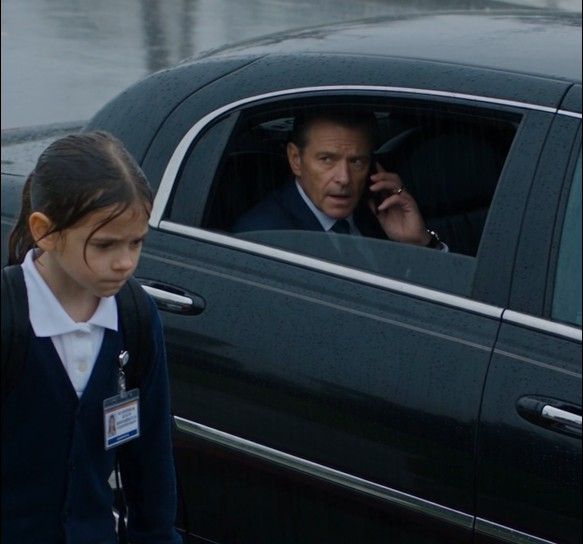
She cried.
The scholarship connected to the championship helped cover later academic programs, just as I had once hoped. But by then, winning felt different from the way I had imagined it the year before.
I did not feel as though the medal proved I belonged.
I had spent a year learning that belonging was not something a scoreboard gave me.
The medal proved only that on that particular Saturday, after a lot of work, I solved enough problems correctly.
That was wonderful.
It was also smaller than my whole life.
After the ceremony, Eleanor handed me the paper bag.
There were three apples inside.
“One for the road,” she said.
“Three?”
“One for your mother. One for Mrs. Chen.”
I looked at Michael. “None for you?”
He shook his head. “Apparently I’m not the hero of this story.”
We all laughed.
Years later, I kept the scratched competition badge from the first year in the same box as the medal from the second. People always expected the medal to matter more.
It did not.
The badge was the thing I touched when a choice felt expensive.
It reminded me of the morning I learned that doing the right thing does not always come with a refund. Sometimes you miss the test. Sometimes the doors close exactly when the rules say they will. Sometimes eight months of preparation ends in mud and rain and a wheelbarrow.
And sometimes nothing you gave up is returned in the same form.
What comes back can be different.
A teacher who still gives you the hard problems.
A mother who refuses to let poverty turn gratitude into debt.
An elderly woman who remembers three red apples.
A second chance that is not handed to you, but earned because you kept going after the first one disappeared.
On the night before I left for the advanced summer program, my mother packed snacks into my bag. At the very top she placed a red apple.
I looked at her.
She shrugged. “Battery charged?”
“One hundred percent.”
“Pencils?”
