He had brought nothing.
I was grateful. I could not have borne flowers arranged to look like forgiveness.
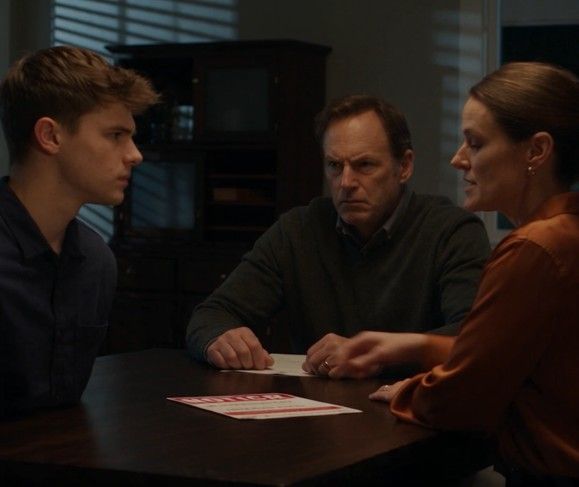
We sat at opposite ends of the kitchen table.
He glanced at the counter, then away.
“I still hear you asking when I became you,” he said.
I folded the corner of my napkin.
“I still hear you saying it was nothing.”
His face changed.
“I know.”
“No. I need you to hear the rest.”
He put both feet flat on the floor.
“When you were little, I signed permission slips because you couldn’t. I signed medical forms. School forms. Everything that let you go out into the world safely.”
He lowered his head.
“You used that trust to take away the place I waited for you.”
A tear fell onto his trousers. He did not wipe it away.
“I did.”
There was no sentence after it.
No mention of Rebecca. No account of the pressure he had felt.
For the first time, I could sit with him without having to fight his excuse.
“I’m not giving you a key,” I said.
“I understand.”
“And being my son doesn’t mean you can live here again.”
“I understand that too.”
I wanted to believe him. I let wanting be enough for that afternoon.
When the hour ended, he stood without making me ask.
At the door, he said, “Thank you for letting me come.”
I touched his sleeve.
Only for a second.
He did not reach for more.
Spring came slowly that year. June helped me clear the upstairs rooms, carrying empty boxes down the steps while I opened windows that had stayed shut too long.
