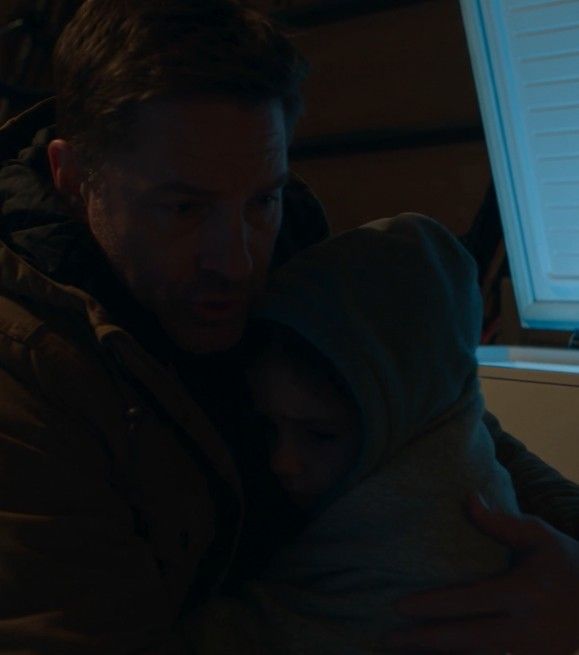
Taylor folded into a chair and sobbed.
I did not comfort her.
Not then.
The forensic interview happened the next afternoon after Lily’s temperature and vital signs stabilized. I did not sit in the room. Neither did Taylor.
A specialist spoke with Lily while investigators observed through a monitor. We were warned not to expect a perfect timeline. Children remember frightening events in fragments.
The fragments were enough.
Lily described four times she remembered being placed inside the chest freezer as punishment. Sometimes the lid stayed slightly open. Sometimes Evelyn stood nearby. The previous night was different: Evelyn closed the lid and walked away after Lily refused to finish a handwriting worksheet.
The freezer had no internal safety release.
Lily screamed until her voice weakened.
She did not know how long she had been inside.
Hospital staff estimated her condition was consistent with significant cold exposure, but they could not calculate exact minutes.
Police did not need an exact number to understand the danger.
Investigators searched the garage under a warrant. They documented the freezer, the placement of boxes around it, the lid, the lack of interior release, and the items inside. They also collected a small kitchen timer sitting on a shelf above a workbench.
Taylor saw the photograph and began shaking.
“My mom uses that timer for punishments,” she said.
That statement became part of the case.
Evelyn was arrested on charges related to child abuse and reckless endangerment. The prosecutor later added an unlawful confinement count after reviewing Lily’s interview and the physical evidence.
The legal language felt too clean.
My daughter had been cold enough to turn blue.
But I learned quickly that justice works through definitions, not the words rage wants.
The more difficult question was Taylor.
Child protective services opened a separate assessment of whether she had failed to protect Lily. The family court issued an emergency order placing Lily with me while the investigation continued. Taylor received supervised visits.
She looked devastated when the judge announced it.
Part of me thought she deserved that devastation.
Another part remembered that Evelyn had controlled Taylor long before I ever met either of them.
That did not erase responsibility.
It complicated it.
Our marriage had been full of moments I now saw differently. Evelyn criticizing Taylor’s clothes. Evelyn making decisions about our vacations. Evelyn arriving uninvited and staying for days. Taylor panicking whenever she disappointed her mother.
I had called it enmeshment once during an argument.
Taylor accused me of hating her family.
