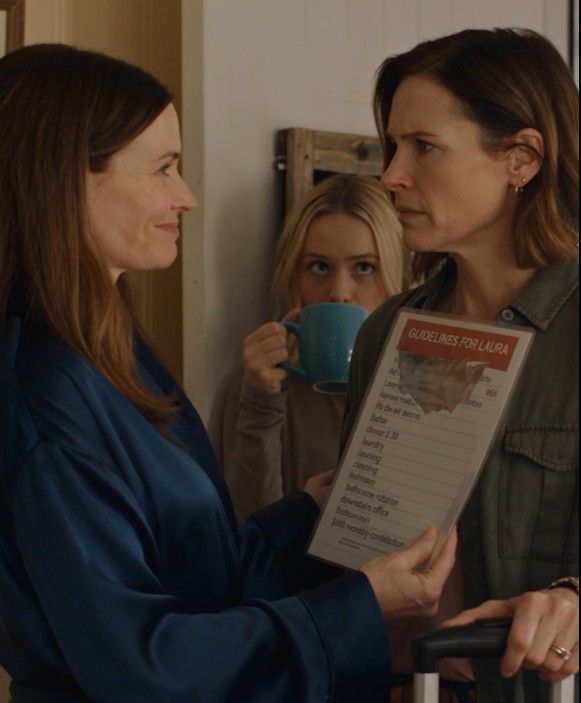
For the first time since I opened the door, he had said the problem without softening it.
It was not enough.
But it was a beginning.
That night, I slept in a hotel.
Ethan offered to come with me.
I said no.
I needed one locked door and one room where nothing had been moved while I was gone.
The next morning, I met with a local attorney to understand how to end the household arrangement properly. Diane and Megan had been living there long enough that I was not going to solve the problem by changing locks or throwing belongings onto the curb. Written notice would be required. The exact timing depended on their status and local rules.
I followed the advice.
No shortcuts.
No revenge scene.
I sent Ethan a copy of the notice before I served it.
He replied: I understand.
Diane did not.
She called fourteen times.
I answered once.
“You are destroying this family,” she said.
“No. I am ending an arrangement I never agreed to.”
“You were gone.”
“Yes.”
“Ethan needed family.”
“He had a wife.”
“You were not there.”
I closed my eyes.
The sentence cut because it was partly true in the most literal sense. I had been overseas.
But absence for work was not abandonment.
“And because I was not physically there,” I said, “you decided I no longer had a voice in my own home.”
She had no answer that did not prove my point.
Megan surprised me.
She asked to meet for coffee.
