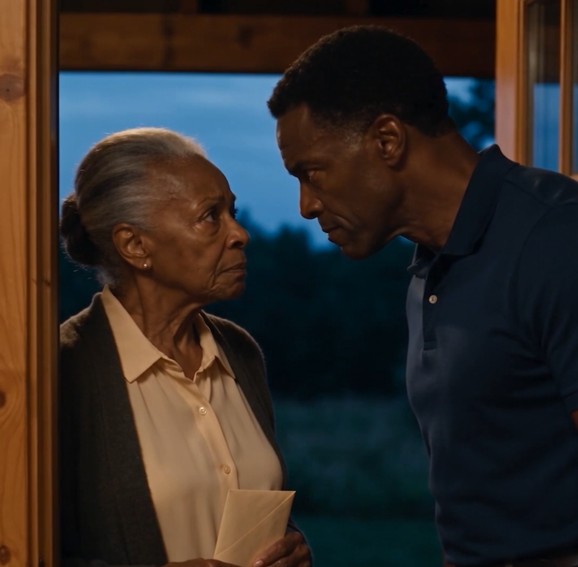
Vanessa stood.
“You’ll lose your son over this.”
Eleanor looked at Ethan and waited.
He stared at the transfer agreement until his eyes filled.
“No,” he said. “She nearly lost him over what we did.”
Vanessa left the cottage. This time Ethan did not follow immediately.
He took the unsigned agreement, crossed out the signature spaces, and handed it to Martin.
“Please keep that,” he said. “In case I try to make myself sound better later.”
It was the first useful thing he had done.
For the next six weeks, Eleanor lived among small, exhausting decisions. Survey appointments. Property records. Calls about access to the cottage. Martin helped arrange the required notices and documents. The existing lot lines and local approvals allowed the cottage to remain with its own entrance and a modest garden.
Eleanor paid for a new lock and a brighter porch light.
She disliked needing both.
Her friend Ruth came for dinner on Tuesdays, carrying food in containers Eleanor was never expected to return empty. Ruth had worked at Eleanor’s company years earlier. She listened without suggesting that a mother should forgive quickly simply because a son had finally cried.
One evening, Eleanor admitted she missed him.
“Of course you do,” Ruth said.
“I’m angry enough to sell the house, and I still wonder whether he’s eating.”
Ruth passed her the bread.
“Those things can happen in the same person.”
Ethan and Vanessa found a rental across town. He sold the second car and several expensive things Eleanor had never asked how they afforded. With professional advice, they began addressing their debts without her property as security.
Vanessa asked for another meeting before they moved.
Eleanor agreed, with Martin present.
Vanessa arrived with figures showing how much cheaper it would be for them to remain. She spoke about interest rates, moving costs, and the difficulty of finding another place with enough space. Eleanor listened until Vanessa finished.
“You haven’t asked whether I feel safe here.”
Vanessa looked at Martin, then back.
“I never intended to hurt you.”
“You told my son I was a burden. You heard him threaten me. You wanted my signature afterward.”
“I can’t change what was said.”
“No. But you could have come here to apologize for it.”
Vanessa gathered her papers. She received neither the property nor the money she had expected, and Eleanor ended their private visits. Future necessary communication would go through Martin. Vanessa’s ability to bargain with Eleanor’s fear was over.
On moving day, Ethan returned his keys in a plain envelope.
There was no note asking to be remembered in the will. No request for another month. He had included the spare key from Vanessa’s handbag and identified each one on a folded sheet.
“I told people we were supporting you,” he said.
Eleanor stood beside the open cottage door.
“I know.”
“I’m correcting it.”
“Don’t make me listen to a list of people who believed you.”
He flinched, then nodded.
“I won’t.”
After his car disappeared, Eleanor sat on the porch steps and cried with such force that Ruth, arriving with groceries, put the bags down in the path and sat beside her without speaking.
The house sold in early autumn to a couple with a young daughter and an elderly father who gardened slowly and badly. At closing, Eleanor watched her signature become a permanent decision. Ethan would never inherit that house. Vanessa would never borrow against it. The proceeds belonged to Eleanor.
