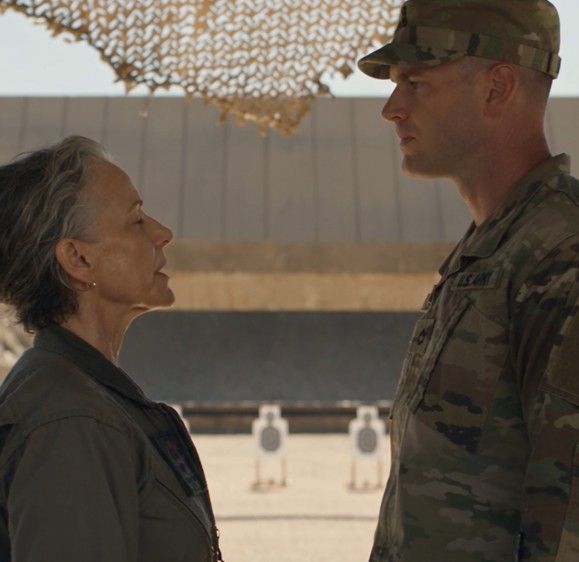
So the changes focused on behavior.
Any weapon placed in the inspection area remained under technical control until formally released. Unauthorized alterations triggered immediate removal from service and command notification. Instructors could describe performance concerns but could not direct technicians to exceed approved settings. Most importantly, range safety personnel were reminded that stop authority existed precisely for moments when rank pressure made stopping uncomfortable.
The rule was not named after Sarah.
She insisted on that.
“If they need my name to respect it, we have the same problem again.”
Olivia began spending extra time in the armory.
At first she only returned tools.
Then she asked what each gauge measured.
Sarah answered the questions that were appropriate and made her read the rest in the manual.
“You could just tell me.”
“Then you would know my answer instead of learning how to verify it.”
Olivia rolled her eyes.
Sarah smiled.
The mentorship grew from there.
Olivia had joined specialized weapons training because she loved shooting. She had never considered technical work part of the same skill. Sarah taught her to see the weapon as a system that did not care how confident the person holding it felt.
“A good shooter notices the target,” Sarah said. “A responsible one also notices the equipment between them.”
Olivia took that seriously.
Months later, she caught a small inspection discrepancy before a training session and called for a pause. The issue turned out to be minor.
One soldier complained about the delay.
Olivia looked at him.
“Then you can enjoy being inconvenienced safely.”
Sarah heard about it and laughed for nearly a minute.
The deeper reason Sarah had reacted so strongly to Blake’s dismissal of technical staff was not secret military status.
She had never been a warrior, exactly as she told him.
She had spent twenty-seven years as a civilian weapons engineer and armorer because she believed support work mattered without needing to become something else.
Early in her career, she helped investigate a training weapon failure caused by an unauthorized modification made by an experienced shooter who believed he understood the mechanism better than the published limit. No one died, but a young armorer standing nearby suffered a serious hand injury.
Sarah remembered the sound more than the sight.
She also remembered the sentence repeated during the investigation: everyone assumed someone more senior had approved the change.
That case shaped the inspection standard she later helped revise.
The faint line Sarah noticed on Blake’s rifle was familiar because she had spent years teaching technicians where unauthorized stress often left evidence.
