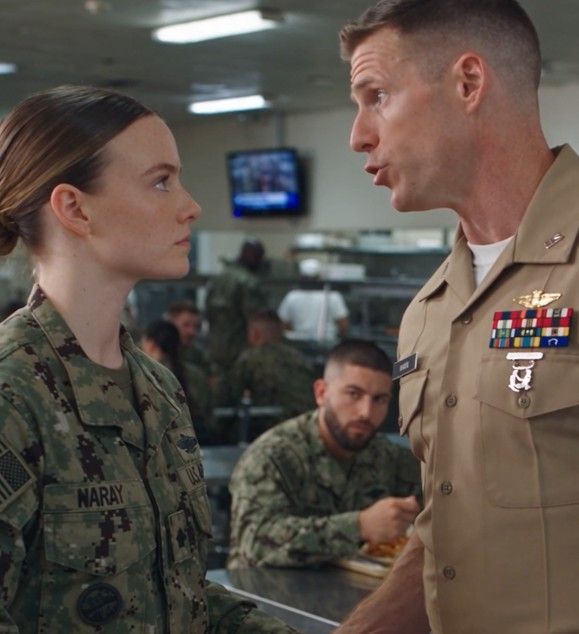
Her most important evaluation came during a multi-day field problem when Ruiz injured his ankle crossing broken terrain. The injury was not catastrophic, but continuing at the same pace risked making it worse. The team was already behind. Stopping would damage their score.
Ruiz insisted he could continue.
Emma examined the swelling and told the evaluator the team needed to redistribute his load and slow the movement.
“That will cost you,” the evaluator said.
“I know.”
“He says he can walk.”
“He can. That is not the same as saying the plan should stay unchanged.”
The evaluator nodded once and recorded the decision.
The team finished late. Their score dropped.
Emma expected criticism at the debrief. Instead, the evaluator asked why she had accepted the penalty.
“Because the mission was to complete the route with a functioning team,” she said. “Not to protect a number by pretending an injury was smaller than it was.”
Ruiz looked down at the brace around his ankle.
The evaluator closed the folder. “Correct.”
That night, Ruiz found Emma outside the barracks.
“I would have kept going until I made it worse.”
“I know.”
“You sound pleased about that.”
“I am pleased I was right.”
He laughed, then became serious. “Thank you.”
Emma looked across the dark training field. “Remember it when somebody junior to you tells you something inconvenient.”
Ruiz nodded.
The lesson had moved again, from cafeteria to field, from one person’s humiliation to another person’s responsibility. That was what Emma wanted the working group to accomplish. Not a softer culture. A more honest one.
When she finally completed the integration phase, there was no dramatic announcement. Bennett handed her the unit patch in a small office with Ruiz, Parker, and two instructors present.
Emma turned it over in her hand.
“You know,” Bennett said, “the first day you arrived, Cole told you your name being printed somewhere did not mean anything.”
Emma smiled faintly. “I remember.”
“Now it is printed on three rosters and two evaluation reports. Feel better?”
“Not really.”
Bennett laughed.
Emma attached the patch to her uniform. The fabric changed how strangers would read her before she spoke. She understood the usefulness of that. She also understood the danger.
A symbol could tell people what someone had earned. It could not tell them they were done earning trust.
A year passed before Mason contacted her.
He did not request an in-person meeting. He sent a letter through Colonel Bennett.
Emma left it unopened for three days.
When she finally read it, she expected defense.
There was less than she expected.
Mason wrote that he had spent months believing he had been punished for one bad afternoon. The staff assignment gave him time to read the statements from people who had worked under him. He began to see the cafeteria not as an isolated lapse but as the clearest version of a pattern he had rewarded in himself.
He wrote about the badge.
That surprised Emma.
He admitted that after earning it, he had started wearing it like evidence that every room should trust his judgment. He had mistaken achievement for immunity from correction.
The last paragraph was short.
I made you clean a mess I created because I wanted everyone to see that I could. I am sorry.
Emma folded the letter.
She did not write back immediately.
When she did, she used three sentences.
I accept the apology. I hope you keep doing the work that made it possible. Nobody earns a permanent seat above correction.
She mailed it and moved on.
The more important ending happened two years after her first lunch.
Emma had completed advanced integration and become a team medical specialist and instructor. She still preferred plain uniforms when the schedule allowed it. She still hated being introduced with long biographies.
One afternoon, a new group arrived at the cafeteria after a difficult selection phase.
