His brother cried then, embarrassed by how quickly it happened. Adam stayed on the phone until the crying passed, not because Michael had died for that call, but because Michael had believed the call mattered while all of them were still alive and making ordinary choices.
For the first time, Adam let that distinction stand.
On Michael’s birthday, the Callahans invited a few people to the house. No speeches. No formal memorial. They ate the food Michael liked and argued about which stories he had exaggerated.
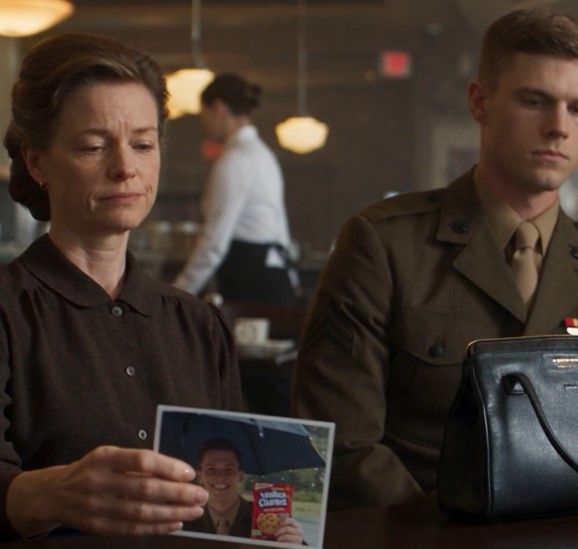
Peter placed the rainy photograph on the table.
Near the end of the evening, he brought out the spare chair from the dining room and set it beside Adam.
Adam stiffened.
Peter noticed. “Relax. I need somewhere to put the cookies.”
He set three open packets on the seat.
Everyone laughed, including Adam.
Later, after the others left, Mrs. Callahan gave Adam a photocopy of Michael’s letter. The original would remain with them. She had marked nothing on the copy except the date.
“You don’t have to keep reading the last paragraph,” she said. “He wasn’t writing a legal argument.”
Adam folded the copy carefully. “I know.”
“Do you?”
He considered the question.
“More than I did.”
Peter walked him to the door. Rain was falling again, light and steady.
“You know,” Peter said, “the first night at the restaurant, I thought surviving meant you had taken something from him.”
Adam said nothing.
“I was wrong.”
The statement did not erase the attack. It did not change the duty roster or the call or the fact that one young man came home and another did not.
It changed one thing only: Adam no longer had to carry Peter’s accusation as proof of a verdict he had already given himself.
Before leaving, Adam glanced back through the dining room.
The photograph was upright. The spare chair was pulled close to the table, not shoved away from it. An open packet of cookies rested on the seat, one cookie broken cleanly in half.
Mrs. Callahan picked up one piece and handed the other to Peter.
Adam stepped into the rain with Michael’s letter in his pocket and, for the first time, did not mistake being allowed to keep living for permission to forget.
