He looked at me over his glasses.
“Movement’s fine. Mainspring failed. Needs cleaning too.”
“It can run?”
“Of course it can run.”
The answer hit me with embarrassing force.
I had built a ritual around a broken object because broken felt honest. Tap. Tap. Tap. Control the small things. I had never considered that preserving something did not require preserving its damage.
“Fix it,” I said.
When I picked it up a week later, the second hand was moving.
I sat in my truck outside the shop and watched it circle the dial.
Tick.
Tick.
Tick.
I cried harder than I had after the course removed me.
Six months after the cabin, I returned to The Grinder.
New class.
New instructors.
Same Georgia clay.
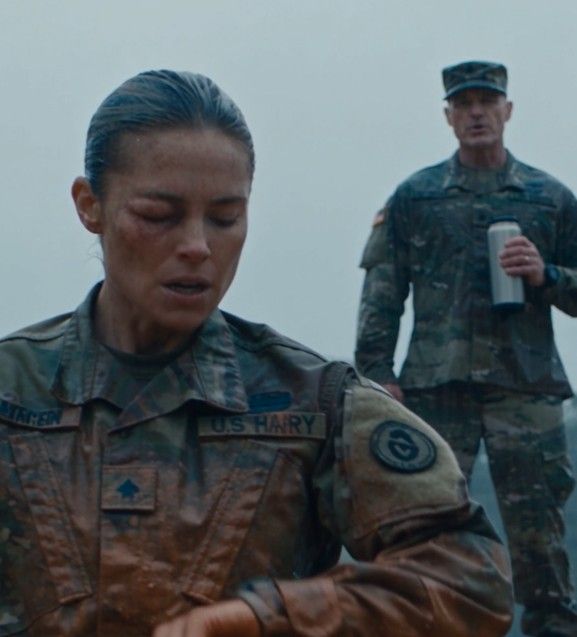
The first morning, rain started before sunrise.
I crawled beneath the same barbed wire with mud filling my sleeves. An instructor paced the catwalk and shouted about speed, discipline, and keeping my hips low.
No one told me I belonged at home with my mother.
That difference was small enough that nobody outside the program would ever notice.
I noticed.
By Day 14, fifty candidates had again become a handful.
My eye was healed.
My medical paperwork was clean.
The Hamilton watch ticked beneath my wrist.
The final assessment used a different scenario and no real emergency interrupted it.
That almost disappointed the part of me trained to expect catastrophe.
I stalked into position, identified the assigned target, waited through the pressure, and completed the evaluation exactly as designed.
One simulated shot.
