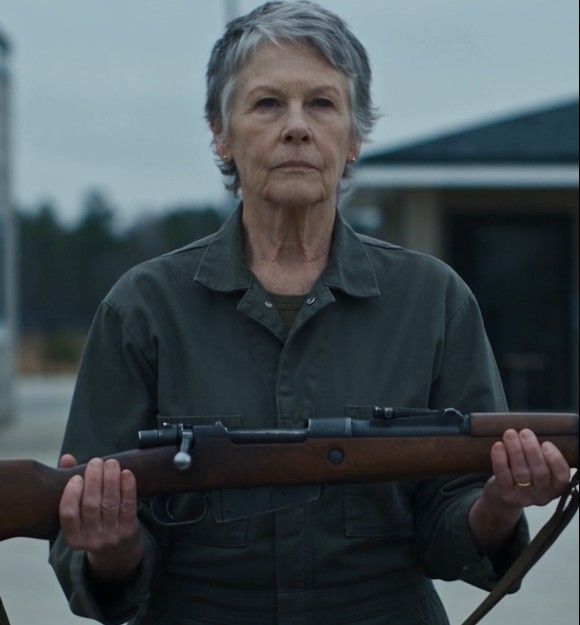
The weekend seminar became an annual visit.
Evelyn taught less about marksmanship than the trainees expected. She taught observation. She made them stand without rifles and describe the range from near to far. She asked them to explain what changed, what remained, and what they only assumed.
Lena became one of her best students.
Mason eventually returned to instructional duty, but not as lead instructor. His return came with a condition he had requested himself: another instructor reviewed any major training change before execution.
Some people saw that as a limitation.
He called it a guardrail.
Between those visits, the range itself changed in ways small enough that outsiders would not notice. Instructors began writing the planned environmental settings on the board before a demonstration instead of adjusting them casually after a shooter arrived. Trainees were encouraged to ask why a condition changed. The control operator logged every manual override with the name of the person who ordered it.
Mercer called the revisions procedural improvements.
Evelyn knew better.
They were really habits designed to prevent pride from hiding inside flexibility.
Mason helped write the new checklist. That surprised her more than his apology. He could have treated the rules as punishment and waited for the scrutiny to fade. Instead, he added one line himself: If a test condition changes after a participant accepts the challenge, state the change aloud and record the reason.
The first time Evelyn saw it, she tapped the sentence with one finger.
“That one yours?”
Mason nodded.
“Good sentence.”
“Expensive lesson.”
“Those are often the ones people remember.”
Lena later told Evelyn that the atmosphere among trainees had shifted too. Questions no longer stopped a class. They became part of it. One morning, a trainee challenged Mason’s wind call during a practice exercise. The old version of him would have heard disrespect. This time he handed over the spotting scope and asked the trainee to show him what he saw.
The trainee was wrong.
Mason explained why without humiliating him.
Afterward, Lena asked whether it had been difficult not to make an example out of the mistake.
“Yes,” Mason admitted. “Which is how I knew I needed not to.”
Evelyn laughed when Lena repeated the story. It was not redemption in one dramatic gesture. It was slower and less satisfying to watch. That was probably why it had a chance of being real.
The change that mattered most to Evelyn happened on a rainy afternoon after her third seminar.
Lena found her packing the wooden rifle case.
“Can I ask something personal?”
“You can ask.”
“Why that rifle? You could use anything here.”
Evelyn sat on the bench.
For years she had given partial answers because the full one hurt.
The rifle had originally belonged to her older brother, Thomas, a Navy marksman who taught her to shoot when she was fourteen. He died in an accident before she turned twenty. Their father wanted to sell the rifle because seeing it in the house was too painful.
Evelyn kept it.
She rebuilt it slowly, replacing what time damaged but refusing to sand away the worn places where Thomas’s hands had rested. Years later, when her competitive career became serious, she used newer rifles for most events. But she always returned to the old one when she needed to remember why precision mattered.
“He was better than I was,” she said.
Lena looked skeptical.
“At first,” Evelyn corrected.
They laughed.
Then Evelyn opened a narrow compartment beneath the felt lining.
Inside was a folded paper no one at the range had seen.
It was not an award or a score sheet.
It was a list of names.
Dozens of them.
Former trainees, instructors, civilian engineers, and shooters Evelyn had mentored over the years had signed the page whenever the rifle returned to a training range. Some signatures were nearly faded away. Harris. Cole. Mercer. Shaw. Men and women who had gone on to teach others.
Lena stared.
“You carried all those people onto the line that day?”
Evelyn looked at the old wood.
“That is why one man’s opinion did not feel very heavy.”
Lena added her name before Evelyn left.
So did Mercer.
After a long hesitation, Mason asked if he could sign too.
