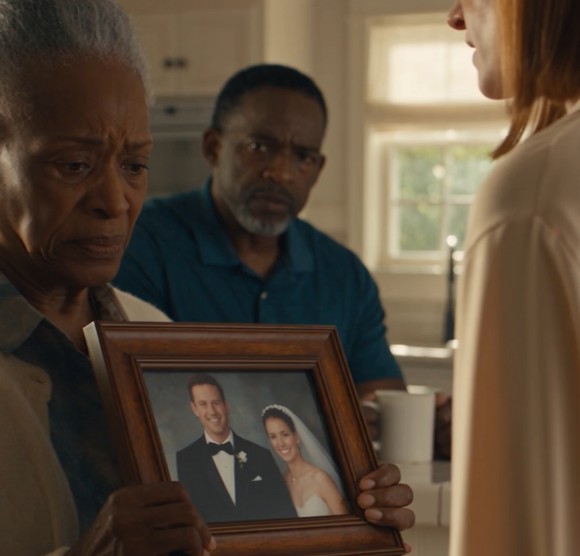
She watched him read.
His face crumpled slowly, without sound.
“I don’t deserve you giving me this.”
“I’m showing it to you,” she said. “It stays here.”
He nodded, wiping his cheek with the heel of his hand.
“Dad knew.”
“Yes.”
“He knew how much you did.”
Eleanor settled into her chair.
“He knew I could stop doing it and still belong.”
Brandon remained by the sideboard until he could speak steadily.
“I loved you,” he said. “That’s what makes it worse. I loved you and still decided what you had was more important than what you wanted.”
Eleanor let the words stand.
Then she pointed to the chair opposite hers.
“The soup is getting cold.”
He sat. They ate slowly, talking first about the garden, then about his work, then about his father. Eleanor laughed at one memory before she realized she was laughing.
She did not take back the report or return his access to her money. His debts remained his. Her home remained hers.
But when he asked whether he could come the following month, she said yes.
By summer, the garden had become a place where people lingered. Ruth brought cuttings. Neighbors brought folding chairs. Eleanor bought a round table that seated six because she liked seeing every face.
Brandon visited by invitation and washed his own cup before leaving. He never again had a key.
One warm evening, after everyone had gone, Eleanor carried her tea into the room overlooking the garden.
The two photographs stood where the last light could reach them. In one, she was a bride. In the other, she was a tired young mother, asleep while someone else held the child.
She settled into her husband’s reading chair.
There were dishes drying in the kitchen and clean sheets waiting to be folded. They could wait until morning.
Outside, Ruth called goodbye from the gate.
Eleanor raised her hand, then rested it on the chair’s worn arm.
For the first time in years, she closed her eyes without listening for someone to call her name.
