“Would he go to prison?”
“I can’t promise an outcome either way.”
Ruth sat very still.
Eleanor stared at a framed photograph of a lake on the office wall. When Brandon was little, he had once stolen money from her purse for a school trip he was ashamed they could not afford.
She had made him return it. Then she had worked an extra shift.
Somewhere between that boy and this man, she had started returning what he took by taking the blame herself.
“I want the records first,” she said. “All of them. I will decide with the truth in front of me.”
That evening, Brandon knocked on her bedroom door.
Eleanor stayed seated. Ruth was downstairs making tea.
“You can talk from there.”
He leaned against the doorframe, his shoulders rounded.
“I was afraid you’d hate me.”
“So you made certain I would be frightened instead.”
His eyes filled, but she did not rescue him from the sentence.
He said the failed business had started with a friend’s warehouse venture. He had kept adding money because quitting would mean admitting he had failed. When the debts grew, he hid the mail.
“And Brooke?”
“She thought we were selling with your permission.”
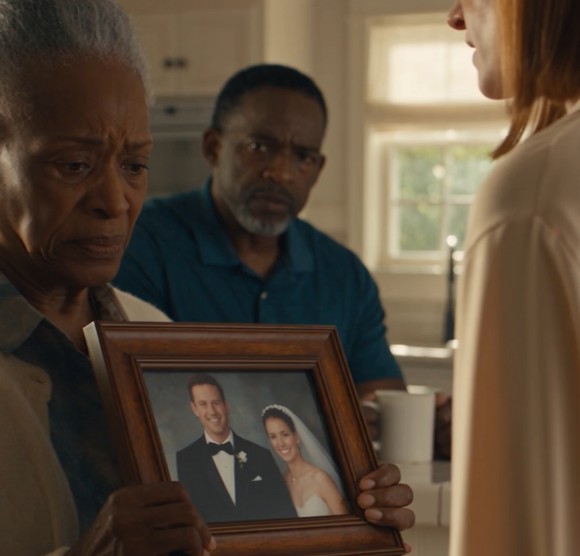
“Did she think I had permission to keep my own photograph?”
He shut his eyes.
“I should have stopped her.”
“Yes.”
He waited. Perhaps he expected the familiar softening, the touch on his arm, the reassurance that he was still a good boy.
Eleanor was too tired to provide it.
“Good night, Brandon.”
The next morning, Ms. Avery requested a meeting with both of them. The closing file had arrived, including correspondence submitted to explain why Eleanor would not be speaking directly with the buyers.
Eleanor sat between Ruth and the lawyer while Brandon and Brooke took the opposite side of the table.
There was another page.
A statement describing Eleanor as increasingly confused, unable to manage household decisions, and distressed by ordinary financial conversations.
Brooke’s name appeared beneath it.
She stared at the paper.
“Brandon said it was just to make the arrangements easier.”
Eleanor could hear the wall clock now.
“You wrote that I was confused?”
“You forgot an appointment.”
“You changed the time and didn’t tell me.”
Brooke’s mouth opened. No answer came.
Ms. Avery placed an email beside the statement. Brooke had sent it herself. Its language was practical, brisk, impatient: Eleanor was likely to resist leaving; the family needed the arrangements settled before discussing details with her.
Brandon turned toward his wife.
“You told me you only sent the address.”
“And you told me she had agreed!”
