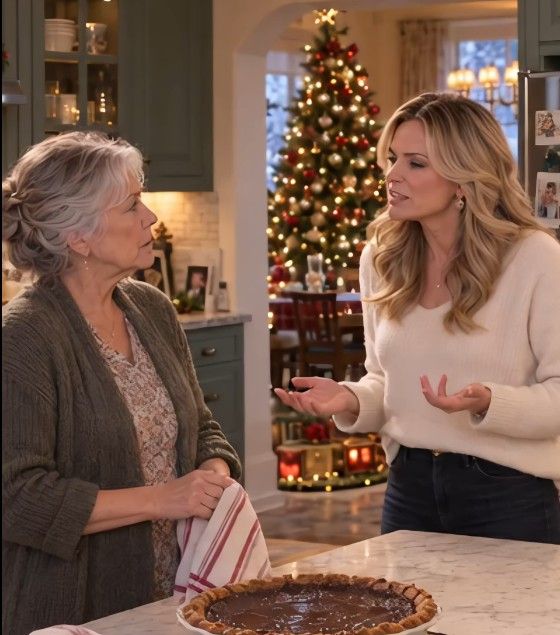
Much later, after the central conflict was truly over, something unexpected arrived, and it felt like a gift rather than another complication. The following Christmas, Kevin brought only one dish — the mashed potatoes the narrator had once expected him to make — and asked before entering whether she wanted help. There were no turkeys for thirty people, no property talk, and no blue folder on the table. The smallness of the gathering felt luxurious. At first the narrator did not understand what was being offered. Then the connection to the blue folder containing financial records and the phrase ‘Future family asset’ became clear. Something that had carried fear, humiliation, or uncertainty earlier in the crisis now carried a different meaning. The change did not rewrite the painful past. It completed it. The narrator laughed once through tears, the surprised kind of laugh that escapes before a person decides whether it is appropriate. Someone nearby laughed too. The moment was human, small enough to be believable and large enough to loosen the last tight place in the narrator’s chest. There was no new enemy behind it, no hidden bill, no condition waiting to be discovered. It was simply a sign that the care the narrator had given the world had not disappeared. Some of it had found its way back.
Peace returned in increments. A full night’s sleep. A meal eaten while it was still warm. A key turned in a lock without anxiety about who might be on the other side. A holiday planned around joy instead of obligation. The narrator noticed these things because crisis had once made them invisible. In the narrator’s home during the Christmas dispute, the rooms slowly collected new memories that did not erase the old ones but outnumbered them. The people who belonged there asked before rearranging anything. They brought food without bringing demands. They stayed because they wanted company, not because they expected service. When difficult anniversaries came, the narrator did not pretend they were ordinary days. There were tears, sometimes anger, sometimes the strange grief of missing people who were still alive but no longer safe to keep close. The grief was allowed. It did not reopen the door. The narrator closed the front door after Kevin left, looked at the quiet rooms Tiffany had once treated as future inventory, and turned off the lights in a house that was simply home again. In that final image, there was no applause and no audience. Only warmth, a familiar room, and the quiet certainty that nobody present needed to earn the right to feel safe.
