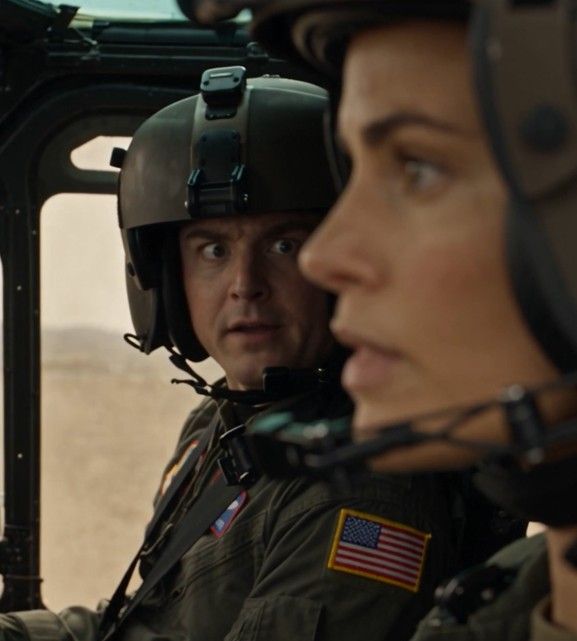
More important than either individual outcome were the procedural changes. When a medical evacuation became time critical, aircrews would receive the full status: what had been verified, what remained unknown, what ground forces reported, and who held decision authority. Controllers could no longer reduce a changing situation to a single color code without stating the unresolved risk.
The command also created a direct escalation path for medics. If a patient was deteriorating faster than the standard evacuation timeline, the medical urgency could reach the operational commander without depending on one desk officer’s interpretation.
Ava read the new checklist and felt no triumph.
“We needed all this because I broke the old process,” she said to Reed.
He shook his head. “We needed all this because the old process broke before you did.”
She looked at him.
“I was angry at you in the aircraft,” he continued. “You turned without telling me what you had decided until we were already committed. Do not make me pretend I loved that because Vale lived.”
Ava nodded. “Fair.”
“But I also heard the medic. I knew why you turned. Next time, bring me into the decision one sentence earlier.”
“There should not be a next time.”
Reed laughed. “There is always a next difficult decision. Hopefully not the same one.”
Their relationship improved because neither needed to rewrite the flight as perfect.
Marcus woke fully four days after surgery. Ava did not visit immediately. She worried that showing up would turn a patient into a symbol in her career investigation. She waited until his medical team said he wanted to see her.
He was pale and exhausted when she entered.
“Captain Bennett?” he asked.
“Yes.”
“You are the one who ignored everybody?”
Ava winced. “That is one description.”
Marcus smiled weakly. “My medic prefers it.”
He thanked her. Ava tried to redirect credit to the medics and crew. Marcus stopped her.
“I heard myself on the recording,” he said. “I told them not to risk a crew for me.”
“You were badly hurt.”
“Still meant it.”
Ava pulled a chair closer. “And my job was not to take tactical advice from the patient on the stretcher.”
He laughed, then regretted it because of his stitches.
The recording device, he explained, was part of a training documentation effort. He had been capturing observations from the exercise so the unit could review communications afterward. Nobody had expected it to become evidence in a real medical emergency.
That detail stayed with Ava. The device had not been planted to expose anyone. It existed for learning, and that was exactly what it forced the command to do.
The investigation also included the medics on the ground, and their interviews made Ava uncomfortable for a different reason. They had seen the helicopter appear through dust after being told it was holding. To them, Eagle Two looked like rescue arriving at the exact moment the patient was crashing. That image made it tempting to tell the story as if Ava alone had chosen life over bureaucracy.
The senior medic rejected that version. “We asked for help,” he told investigators. “Ground security gave us one assessment. Operations had another requirement. Captain Bennett acted on incomplete information. She got our patient out, and I am grateful. But if we learn the wrong lesson, the next crew could fly into a genuinely unsafe site because everybody thinks breaking a hold order is heroic.”
Ava read that statement twice.
