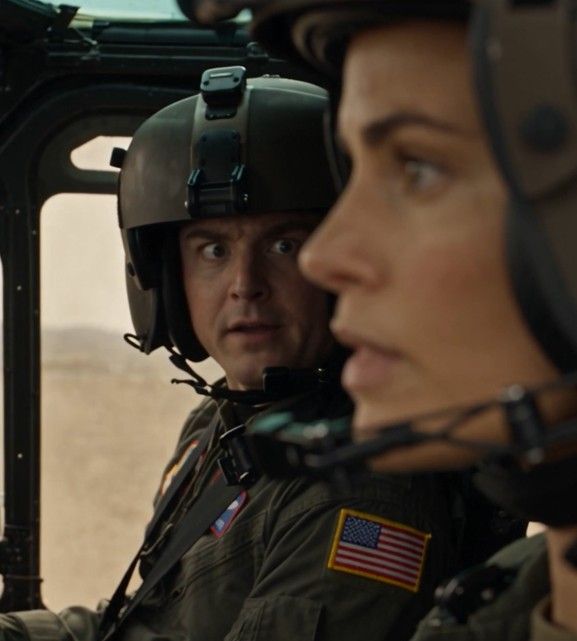
Ten minutes later, she sat in a small operations room with Collins, her copilot Chief Warrant Officer Mason Reed, the medic, and an investigator from flight safety. The recording device rested on the table between them in a clear evidence sleeve.
“Where exactly was this found?” the investigator asked.
“Inside the patient’s vest, secured to a chest strap. It was already running when we cut his gear away.”
The investigator connected a copy of the audio file to a secure system. “We listen once. No one jumps to conclusions.”
The recording began with wind, shouted voices, and broken radio traffic. Ava recognized none of the speakers at first. Then a medic on the ground called for evacuation and gave the wounded soldier’s condition. Another voice responded that the primary aircraft had a mechanical warning and a replacement was being launched.
A third voice asked how long.
Twenty-five minutes.
Someone cursed.
Then came the part that changed the room.
A ground security leader reported that the immediate landing area had been swept and that his team could secure an emergency touchdown. The statement was repeated twice. An operations voice answered that the site remained officially uncleared because the required hazard confirmation had not been entered into the system.
The medic on the recording shouted that the patient might not survive the delay.
The operations voice replied, “Eagle Two holds until status is green.”
Ava looked at Collins.
He did not look back.
The recording continued. The ground team repeated that they had eyes on the landing area and no immediate threat. The operations voice repeated the hold. Then another speaker—weak, close to the recorder—said, “Do not send a crew into danger for me.”
The wounded soldier.
A medic answered, “You let us worry about that.”
Moments later, rotor noise grew in the background.
Someone yelled, “Eagle Two is coming in.”
The file captured the landing from the ground: dust, shouts, the stretcher moving, then the recording became muffled when the soldier was loaded into the aircraft.
Collins stopped the playback.
No one spoke.
Ava finally said, “I was told there was no verified security.”
The investigator nodded. “That is what your radio log shows.”
Reed leaned forward. “Ground had reported otherwise.”
“Ground had reported a local assessment. The formal clearance had not been completed,” Collins said.
Ava looked at him. “Was that distinction communicated to us?”
Collins’s jaw tightened. “No.”
That answer mattered. Ava had not landed knowing the zone had been fully cleared. She had landed knowing only that a wounded soldier was deteriorating and that the replacement aircraft was too far away. Her decision had still carried risk. The recording did not erase that. But it showed the risk picture inside operations had been more complicated than the order she received.
The investigator replayed one section. The operations voice was clearer the second time.
