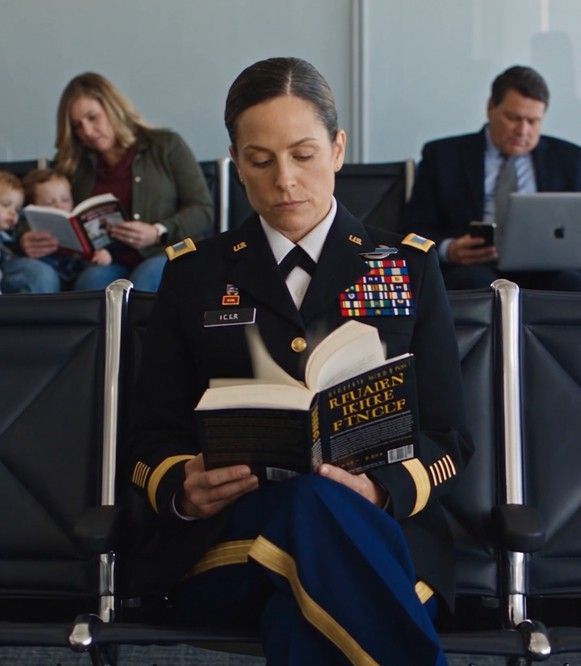
I appreciated the response because it was neither theatrical nor dismissive.
“Make sure the class is not about recognizing lieutenant colonels,” I said.
Ortiz looked at me.
“It should be about respect before recognition.”
He nodded. “Understood.”
Three weeks later, a letter arrived through official channels.
Carter had written it himself.
The first paragraph apologized again.
The second mattered more.
He wrote that during the corrective class, Mason had challenged him in front of the section.
You keep saying you did not know who she was, Mason told him. Why did you need her to be somebody before you treated her like a person?
Carter wrote that the question embarrassed him more than the airport had.
Good, I thought.
Embarrassment can be useful when it is pointed at the right thing.
He did not ask me to forgive him.
He ended by saying he had begun noticing how often jokes in his group depended on someone else being too tired or junior to object.
I filed the letter and moved on.
Six months later, our joint group supported a major readiness exercise that included Carter’s unit.
I did not know until the planning conference.
Names appeared on a roster. His was one of them.
I could have avoided him.
I did not.
During the exercise, a convoy delay created a chain of problems across three units. Carter, now a corporal, was assigned to a staging area responsible for tracking equipment movement. He noticed two serial numbers did not match the manifest and stopped a load before it moved to the wrong location.
The delay irritated people.
He held his ground.
The correction saved hours later.
At the after-action review, I asked the logistics chief who caught the discrepancy.
“Corporal Carter.”
I nodded.
“Good work.”
