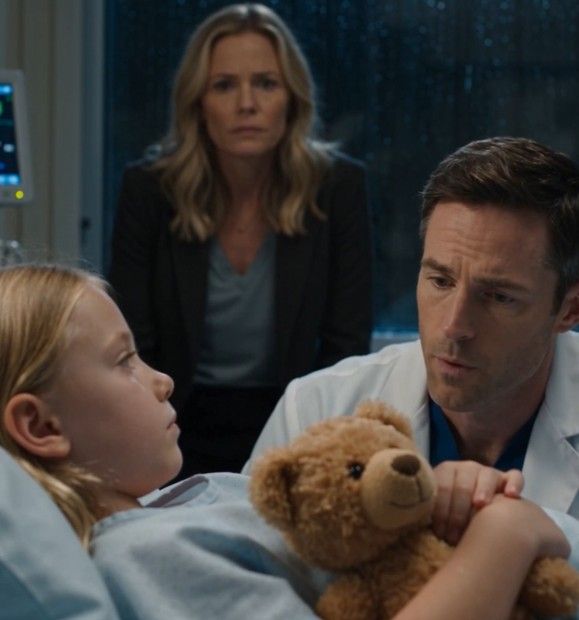
Claire stood before either of them spoke.
“The samples match,” Dr. Shah said.
Claire gripped the bedrail.
“Both samples are Emma’s.”
Daniel’s face was serious, but there was something underneath it now. Relief.
“And the protein marker?” Claire asked.
“Present in both,” he said. “Seven years apart.”
That changed the medical question.
The marker was not a temporary consequence of Emma’s current illness. It had been there before the six months of hospitalizations, before the medications, before anyone had named the condition they thought they were treating.
Daniel pulled a chair closer.
“We sent the genetic panel urgently. I want the immunology service to review everything from the beginning.”
Claire’s stomach clenched. “Were you wrong?”
“We may have been treating the wrong mechanism.”
“That means yes.”
“It means the evidence we had supported one diagnosis, but this older sample changes the weight of that evidence.”
“Daniel.”
He met her eyes.
“Yes. We may have been wrong.”
She wanted him to defend himself. She wanted him to say no reasonable doctor could have known. She wanted something she could fight.
Instead, he said, “I am sorry.”
Claire sat down.
For six months she had watched Emma endure infusions, blood draws, nausea, headaches, and days when walking to the bathroom felt like a marathon. Some of those treatments had helped temporarily. Some had done almost nothing.
“What did we do to her?”
Daniel’s voice stayed low. “The treatments she received are used for inflammatory disease and were medically reasonable based on what we knew. I do not see evidence they caused permanent harm. But if this new pathway is correct, they were not targeting the underlying problem.”
“Six months.”
“I know.”
“No, you don’t.”
He accepted that.
Emma woke while they were still talking.
She looked from one adult to another. “This is a serious-face meeting.”
