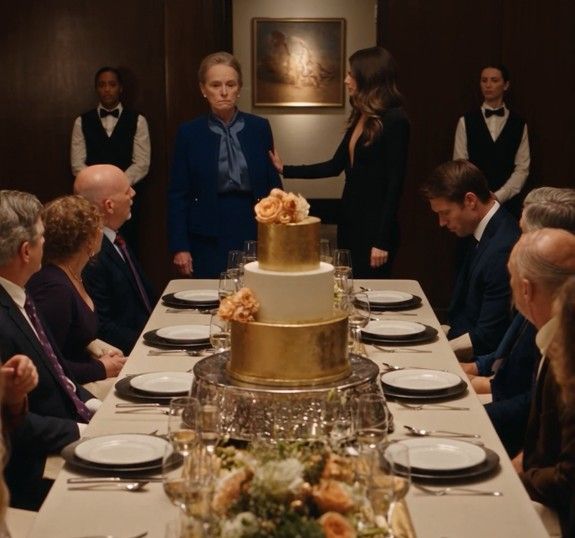
I told them I would not pay their bills, finance their celebrations, or remain present while they spoke to me with contempt. If we were to meet, we would do it with honesty and ordinary manners. They could leave if those conditions seemed too much.
They stayed. We drank tea. Nobody asked about the sale.
Trust returned in intervals rather than in a speech. Reid brought soup when I had a cold and left without inspecting my mail. Tessa invited me to a small supper and put a chair out before I arrived.
I went, but I drove myself and left when I was tired. Loving them no longer required surrendering my way home.
One evening Reid came by to return a serving dish. He had washed it and wrapped it in a clean towel, though in the past he would have left it in his car until I asked twice.
He stood at my table looking at the single place I had set. “Do you want company?” he asked.
I considered the question. I was tired, and once I would have hidden that tiredness for the sake of any hour he offered. “Tomorrow would be better,” I said.
He nodded without making me defend the answer. That was how I knew something was changing. An apology can be prepared. This response had come without warning, in a moment when he wanted something and I wanted something else.
The next day he brought bread and asked about the trip I had once postponed for a business problem. I told him I was making plans, slowly. I had spent so long postponing myself that choosing a destination felt oddly difficult.
“What would you pick if no one needed you to be anywhere else?” he asked.
I smiled. “That is what I’m trying to learn.”
We ate at the kitchen table. He told me about a mistake at work that he had admitted before anyone discovered it. His manager had been disappointed, but they had made a plan to fix it. He sounded relieved rather than proud.
“I kept thinking how many times I let you fix things before I had to tell the truth,” he said.
“I helped make that possible.”
He shook his head. “You helped. I used it.”
Neither of us hurried to turn those words into reassurance. We let them stand, then talked about the bread and the cold weather and a bird that had begun nesting near my back door.
When he left, he took his own cup to the sink. I watched him go with love and caution together. They no longer felt like enemies. I could want him to become better without paying for the privilege of waiting. I could also enjoy the quiet room after the door closed. Both things belonged to me.
Months after the dinner, Denise called to say the staff had something for me. I expected a framed photograph or one of those engraved plaques people give when they do not know how to say goodbye.
Instead, she brought a narrow wooden box to my kitchen. Inside lay a small brass plate, cleaned until its lettering showed clearly. It had once been fixed to the dispatch office door.
W. TATE, it read.
“I thought that had been thrown out when we renovated,” I said.
Denise smiled. “Someone kept it. Then someone else kept it. Turns out we were all very bad at letting you disappear.”
Beneath the plate lay a folded scrap of paper. I opened it and recognized my own handwriting from years before. It was a note I had taped inside a driver’s lunch container when he started his first shift after a long illness.
There is a place for you here.
He had saved it and sent it back with the plate. On the reverse, in careful block letters, he had added, Always was.
I read both sides twice. All those years, I had believed the company was the inheritance I needed to leave my son. I had missed the quieter inheritance already moving through it: the way people made room for one another, the habit of noticing who had been left standing.
I put the brass plate on the windowsill beside my kitchen table. That evening I set one place, heated soup, and sat in the chair of my choosing. Outside, the streetlights came on. Inside, my name caught the last soft strip of daylight, and I stayed long enough to watch it fade.
