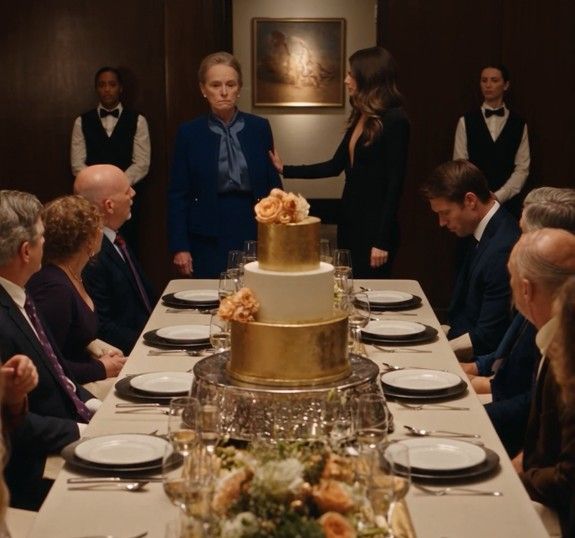
He asked whether the sale was truly going forward. I showed him the appointment list Alan had given me. There were meetings, negotiations, deadlines. It was a process rather than a threat I could withdraw when he said the right thing.
“What happens to me?” he asked.
I felt the familiar tug to reassure him with an amount, an assurance, a promise that nothing would really change. Instead I said, “You keep your job. You build your life. You decide how to treat people when it costs you something.”
He stayed for twenty minutes. Before leaving he said he was sorry. I thanked him for saying it. I did not tell him that everything was forgiven.
Tessa sent a message that evening describing the incident as a misunderstanding and saying I had punished them in front of people who mattered to Reid. She did not mention the restroom. She did not mention my empty chair.
I answered once. I said I would discuss it with her only when she could describe what she had done without blaming my reaction. Then I muted the conversation and placed the flowers in water.
Over the following weeks the sale gave my days a demanding structure. I answered questions about equipment, leases, maintenance records, and contracts. Sometimes the buyer wanted terms I could not accept. Sometimes my own memories made an ordinary concession feel like betrayal.
Alan reminded me that selling a company did not erase the years spent building it. Denise reminded me that our customers still needed their shipments delivered while lawyers exchanged drafts. Both reminders helped.
I walked through the repair shop one morning and found an old office chair against the wall. Its upholstery was patched with black tape, and one arm had been replaced. For a moment I thought it was the borrowed chair from my first office.
It was not. That original chair had vanished decades before. But I recognized why I had looked for it. I wanted proof that the woman who started with so little was still present in the woman signing away so much.
A mechanic held the shop door open for me. “You all right, Mrs. Tate?”
“Yes,” I said. “Just remembering.”
My son called on Sundays. At first his questions circled the sale. Later he asked about my health and whether I had been eating. I answered honestly without rewarding concern with a financial update.
One Sunday he told me Tessa was furious that he had refused to ask me for a loan. He had put their household expenses on paper and discovered how often they had treated my help as an extra income stream.
“I didn’t know how much it was,” he said.
“You knew the individual requests.”
“Yes.” He paused. “I just never added them up.”
I told him that adding them up was a good beginning. He asked whether I would look at his budget. I said no, gently. I had already managed too much of his life. A qualified adviser could help him without carrying the weight of being his mother.
The hardest day came when he asked to meet me at the yard. He arrived in work shoes instead of the polished shoes he wore to the dinner. For one hopeful second I imagined he had finally come to claim a place there.
But hope can become another way of refusing to see. I asked him why he had come before inventing an answer.
“I want to understand what I thought I was inheriting,” he said. “Not so you stop. I just think I should have known.”
I took him through dispatch, then through the shop. Denise explained the pressure of a missed pickup and the chain of people a delayed delivery could affect. A driver showed him the log he used to track inspections.
Reid listened. He asked awkward questions and accepted plain answers. When a truck reversed into its bay, he stepped away at once instead of making someone guide him twice. It was a small thing. I noticed it because responsibility usually first shows itself in small things.
At the end, he said, “I used to think owning it meant being important.”
“It means being answerable,” I said.
We stood beside the gate for a while. Then he said he understood why I was selling, though he wished understanding had arrived without that dinner. I told him I wished the same thing.
Closing took longer than either side first expected. An equipment matter needed resolution, and one contract required additional review. I did not use the delay to threaten Reid. I did not use it to test whether he could earn the company back.
The decisions about my future and my relationship with my son were connected, but they were not the same decision. Keeping them separate was new work for me. I practiced each time my phone rang.
When the papers were finally ready, I read them with Alan and the advisers who had reviewed the financial terms. My signature felt heavy on the final page, though the pen itself was ordinary.
Afterward, Denise and I stood in the quiet yard. The new owners would keep her in the role she knew better than anyone. The negotiated transition arrangements gave the staff a plan rather than a rumor. There were limits to what any contract could guarantee, but I had done the work within my power.
“You should go home,” she said. “For once, before everybody else.”
I laughed, and then I did.
The proceeds, after the obligations and arrangements attached to the sale, gave me security I had never permitted myself to enjoy. I did not announce a number to my family. I worked with Alan to put my affairs in order and to make clear that future gifts would be choices rather than expectations.
I set aside money for causes tied to the lives of the people who had worked beside me. I planned carefully. There would be no dramatic midnight promise, no public punishment dressed up as charity.
Reid and Tessa eventually came together to my house. They arrived on time and asked whether I wanted them to remove their shoes. Tessa carried no expensive gift. She stood near the door until I invited her to sit.
“I told you to eat in a restroom,” she said. Her face reddened. “I made it sound like a joke because I wanted people to laugh. I was wrong.”
I watched her hands. She held them still in her lap instead of reaching for her phone.
“Why did you want that?” I asked.
She looked at Reid and then back at me. “I liked feeling like I controlled the room.”
It was the first answer she had given that did not place her behavior in my hands. I accepted the apology. Acceptance did not mean dinners would resume as though nothing had happened.
