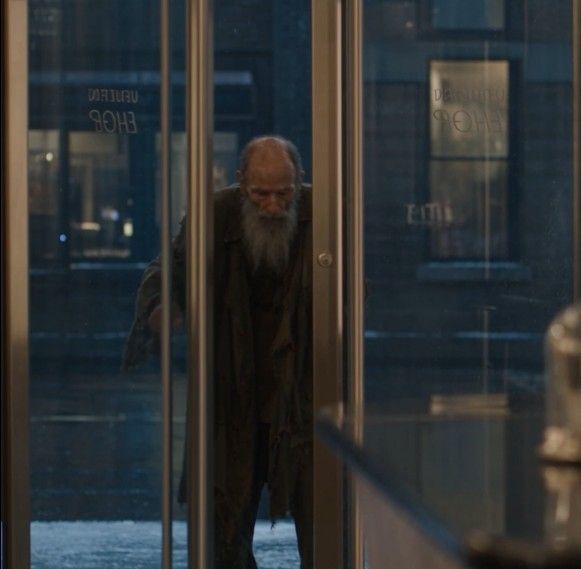
Five years later, Samuel had a stroke.
That was when everything changed.
The barber, whose name was Mateo Ruiz, unfolded the rest of the documents.
There was a court order. A copy of an old partnership agreement. A temporary injunction preventing further transfer of the business or building. And a letter from a legal-aid attorney explaining that a judge had restored Samuel’s voting rights while a fraud case moved forward.
The receptionist stared at him.
“You’re saying he owns this place?”
Samuel answered before Mateo could.
“I own part of it. Enough that my nephew was not allowed to sell it without me.”
“But Derek owns the salon.”
“He told you that.”
The difference hung in the air.
Mateo looked at Samuel’s torn coat.
“How did you end up…”
He stopped before finishing the question.
Samuel saved him from it.
“Looking like this?”
Mateo nodded reluctantly.
Samuel folded his hands over the back of an empty chair.
“Because when someone controls your money, your mail, your medical appointments, and the story everyone hears about you, ownership on paper can become a very theoretical thing.”
The receptionist looked away.
Samuel explained that after the stroke, Derek petitioned to manage his affairs temporarily. At first, Samuel needed help. He could not write clearly. He struggled to speak. He lived in rehabilitation for months.
Then he improved.
Derek kept telling everyone he had not.
Bills stopped being paid. Samuel’s apartment lease lapsed. Bank notices went to an address he no longer controlled. His clothes disappeared during a move between facilities. By the time a volunteer legal advocate met him at a church meal program, he was sleeping in a shelter and carrying copies of records that still listed him as owner of property he could not enter.
“How long?” Mateo asked.
“Eleven months.”
The stylist who had laughed earlier lowered his eyes.
The receptionist’s face had changed from contempt to alarm.
Samuel noticed.
“Don’t be afraid because you think I came to punish everyone who works here.”
