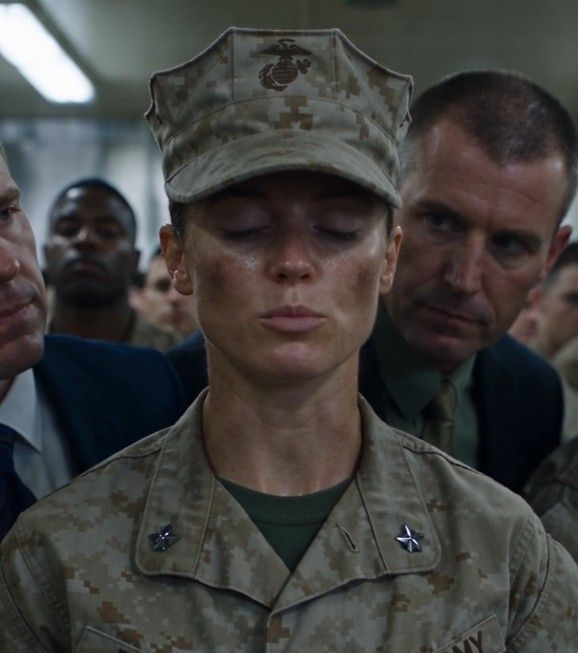
She did not want to describe herself as afraid.
She did not want to give the contractor more importance than he deserved.
Finally she wrote about the moment after the slap instead. She wrote about sixty Marines moving forward and how close collective anger had come to becoming its own kind of mistake. She wrote that the most important thing the officer did was stop everyone from turning solidarity into retaliation.
“You really put that in there?” I asked.
“Yeah.”
“You know most people would’ve just written that he hit you.”
“They already know that.”
That was Sarah. Even hurt, she was looking for the piece everyone else might miss.
The contractor requested a formal opportunity to respond through his company’s process. Sarah did not have to attend. She chose to.
I waited outside the conference room.
When she came out, she looked exhausted but calm.
“Did he apologize?”
“Eventually.”
“Did you believe him?”
She thought about it.
“I believe he’s sorry there were cameras and witnesses. I don’t know if he’s sorry he decided I was someone he could hit.”
That distinction stayed with me.
Sarah had not gone in asking for remorse she could not verify. She asked only three questions. Had he seen her name before entering the chow hall? Had he known Captain Hale’s case was being reopened? Had he understood that striking her might be interpreted as intimidation once that connection became known?
He answered yes, yes, and no.
The third answer was probably true.
He had not planned far enough ahead to understand what his own temper would create.
That became part of the larger lesson for everyone who watched the case. Harm did not require a mastermind. Sometimes arrogance, fear, and one impulsive decision were enough to expose years of weaker decisions underneath.
The company later sent a new compliance team to the installation. The first meeting was uncomfortable. Marines expected polished language and excuses. Instead, the new lead began by acknowledging that signatures on maintenance paperwork were not decorations and that schedule pressure did not change what a verified inspection meant.
Sarah sat in the back.
Afterward, one of the technicians approached her.
He was older, with grease permanently worked into the lines of his hands.
“Hale came to me once,” he said.
Sarah went still.
“About the brakes?”
The technician nodded. “I told him the paperwork was probably right because I didn’t want to reopen a completed job. I wasn’t the one who signed it. I didn’t falsify anything. But I could’ve looked.”
He swallowed.
“I should’ve looked.”
Sarah did not absolve him. She did not attack him either.
“Then look next time.”
He nodded.
That sentence traveled through the maintenance shop faster than any order.
Then look next time.
It was not dramatic enough for a plaque. It was useful enough to save someone.
Sarah repeated it to our platoon the next week before a vehicle inspection. Nobody rolled their eyes. Nobody treated the extra check like wasted time. We were still tired, still impatient, still human. The difference was that now we knew exactly what shortcuts could cost.
Sarah still had one question about the folder.
Why was her name so prominent on the first page?
The officer who had opened it in the chow hall called her into his office after the findings were released.
I went with her because she asked me to wait outside.
Twenty minutes later, the door opened.
Sarah was crying.
Not the stunned tears people shed when bad news lands.
Quiet tears.
She held a single photocopied page.
“What is it?”
She handed it to me.
