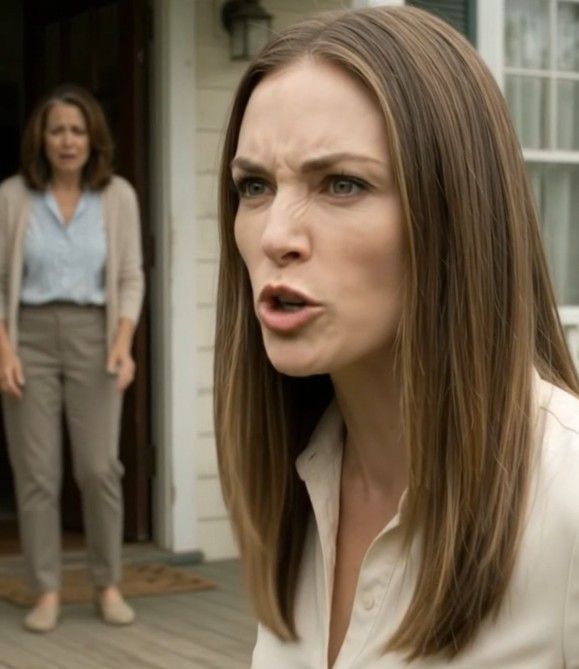
“Your memories aren’t worth more than my future!” my daughter Sarah screamed, pulling my mother’s old rocking chair off the cottage porch.
One runner split against the steps, and the moving men stopped while Sarah ordered them to take the upstairs bedroom.
On the kitchen counter sat an architectural drawing showing the wall between my mother’s bedroom and office marked for demolition.
“Who gave you permission?” I asked.
Sarah said, “Grandma wanted this place used, not turned into a shrine.”
She had never asked what Grandma wanted while she was alive.
My mother died six months earlier.
Her small cottage stood on a wooded road where she had planted peonies and taught Sarah to bake bread.
I inherited it and was still deciding whether I could bear to change anything.
Sarah had been struggling with rent.
I offered to help her look for an apartment and, if it became necessary, let her stay in the cottage temporarily with clear rules.
She told me she didn’t need charity.
Now her furniture was blocking the driveway.
She’d hired movers, ordered construction supplies, and changed the name on the mailbox without speaking to me.
One of the men asked whether the demolition crew should arrive Monday.
“There will be no demolition,” I said.
Sarah rolled her eyes.
“That’s what you say because you’re afraid to do anything.”
I knew she was under pressure.
Her marriage had ended badly, and she’d recently lost an important client at work.
I wanted to protect her without surrendering the last place I could still smell my mother’s bread.
I helped the movers carry Sarah’s boxes back to the truck.
She accused me of humiliating her in front of strangers.
I told her she could come to dinner and explain her situation, but she could not move in by force.
A contractor arrived just as the truck pulled away.
He held a measuring tape and an invoice for a deposit already paid.
The planned renovation involved removing the wall that separated the small office from the bedroom.
My mother had built that office into a place for tutoring adults learning to read.
After her retirement, she volunteered there every Wednesday.
The wall displayed thank-you notes from students who had once been afraid to fill out a job application.
