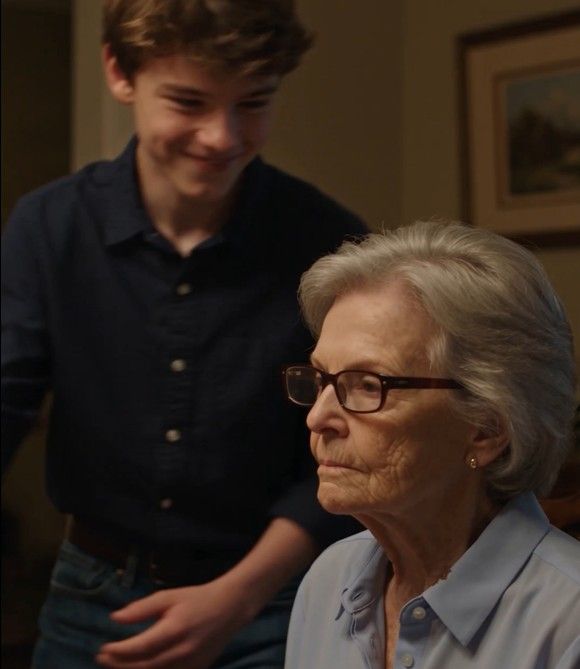
Chocolate frosting slid down my cheek while my son laughed. My sixteen-year-old grandson Tyler had pushed my birthday cake into my face hard enough to twist my glasses sideways.
“Mom, you should see yourself,” Mark said.
Lisa covered her mouth, but her shaking shoulders gave her away. I removed my glasses slowly. Only then did Tyler stop smiling.
“Grandma, I’m sorry.”
Three months earlier, he had said the same thing after leaving a rubber snake near the upstairs landing. I startled, missed a step, and sprained my ankle. Mark called it a harmless prank that went wrong.
I forgave Tyler because I loved him. I forgave him again when he hid my reading glasses and watched me search. Then my keys began moving, sudden noises made me jump, and every protest became proof that I could not take a joke.
“He’s just a kid,” Mark would say.
They had lived in my house for almost two years after Mark’s business struggled. Since George died, the footsteps upstairs had made the place feel alive. I had mistaken that feeling for safety.
Now Tyler stood beside the ruined cake, waiting for the apology to do its familiar work.
“You always apologize afterward,” I said.
“I said I’m sorry.”
“And then everyone waits for me to forgive you, so nobody else has to change anything.”
Mark leaned back. “You’re ruining your birthday over cake.”
I looked at the clock George had hung above the doorway. The table was mine. The chairs were mine. The house was mine. Somehow I had become the only person expected to ask permission to be comfortable inside it.
“Go upstairs,” I told Tyler. “Start packing.”
Mark’s smile vanished. “We live here.”
“Because I allowed you to.”
Then I noticed Lisa’s phone propped against a vase. A red recording symbol glowed on the screen. The camera faced my chair.
“Were you recording this?”
“Your birthday,” Lisa said, reaching too quickly.
I picked up the phone first. It had been recording for twenty-three minutes, long before the cake touched my face. Tyler stared at it, and the expression that crossed his face was not embarrassment. It was fear.
I told them to leave by morning. Later, alone in my bedroom, I wondered whether that angry deadline made me cruel—or merely exhausted.
At eleven thirty, three soft knocks interrupted the silence.
“Grandma? Please don’t tell Dad I’m here.”
Tyler slipped inside carrying a small black flash drive. His hand trembled when he held it out.
“There’s something you need to see before we go.”
I asked what was on it. Tears filled his eyes, and he glanced toward the locked bedroom door before answering.
“The reason Mom recorded you.” He lowered his voice until I had to lean closer. “They wanted you to lose control.”
I took the flash drive, but I did not plug it in immediately. Tyler was shaking too badly to hold his sleeve still. I pulled the chair away from my desk and asked him to sit.
“What do you mean?”
He wiped his nose with the back of his hand. “Dad said if you got angry enough, people would finally believe you couldn’t handle living alone.”
The room seemed to narrow around the desk lamp. I could hear the clock downstairs, the clock George had hung, moving through ordinary seconds while an extraordinary explanation took shape.
“They wanted to move me?”
“He said it would be better if someone else managed things. The money. The house.”
I asked what was on the drive. Tyler said he had copied messages from a family tablet and saved a recording he made after overhearing his parents discuss the birthday. He had also saved videos of earlier pranks from a folder Lisa used.
“I didn’t know about all of it at first,” he said. “Then Dad told me to keep going.”
I felt an impulse to say he was only a child and couldn’t understand. Those were the words that had kept him from having to understand anything. I swallowed them.
“You are responsible for what you did to me,” I said. “The adults are responsible for what they asked you to do.”
He nodded, crying harder. “I know.”
We opened the files on my computer. I did not ask him to break into anything else, and I did not change or delete what he had copied. We would need advice about preserving it and establishing what it actually showed.
