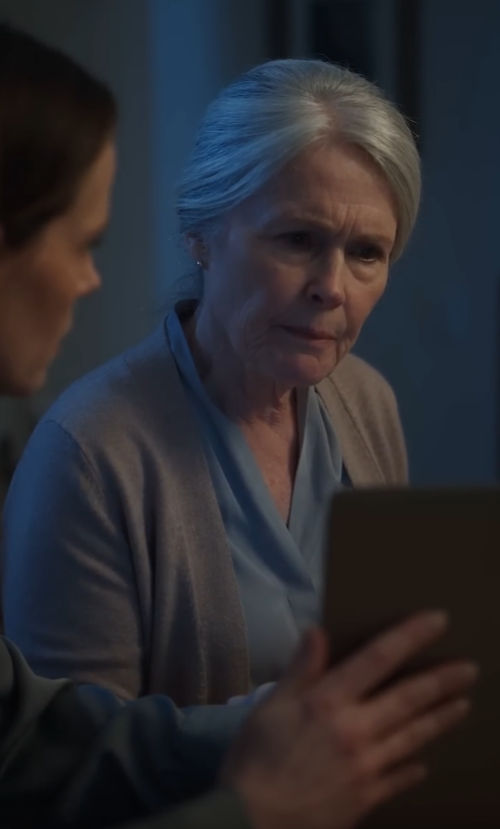
There were also messages Daniel had written in Eleanor’s name, telling Claire that her mother needed distance and did not want unannounced visits.
The lies had been tailored to each woman. He had given Eleanor a version in which Claire had abandoned her, and Claire a version in which Eleanor had rejected her.
Neither had needed much convincing because each already carried a private fear that made the lie believable.
Claire feared she had always been too difficult to love.
Eleanor feared that growing old had made her a burden.
Daniel had taken those fears and turned them into a wall.
One afternoon, while sorting a box of old papers, Claire found a birthday card she had written to her mother when she was twenty-seven. On the front was a photograph of a field of wildflowers. Inside, she had written only three sentences, telling Eleanor that she missed her, that she hoped she was well, and that she would always be grateful for everything her mother had done for her.
The card had been returned unopened.
Claire sat on the floor and held it against her chest.
Eleanor lowered herself beside her with difficulty.
“I didn’t know,” she whispered.
“I know.”
“I would have answered every one.”
Claire looked at her.
“I would have come home if you’d asked me.”
They sat on the floor among the boxes, mourning not only what Daniel had done but also the ordinary days they could never recover. There would be no way to return to the birthdays they had spent apart or the phone calls they had never made. They could not reclaim the years, and pretending otherwise would only make the wound deeper.
But they could stop adding new years to it.
So they began with small things.
Claire called her mother every morning, even when she had nothing important to say. Eleanor began sending her photographs of the garden, including several of the roses Henry had planted before his death. They cooked together and argued gently about how much salt belonged in soup. Claire learned that her mother had developed a habit of reading the last page of a novel first because she could no longer bear the suspense of not knowing whether the characters would be all right.
Eleanor learned that Claire still hated mushrooms, still folded her laundry immediately after drying it, and still became quiet whenever she was worried about disappointing someone.
They rediscovered each other through details too small to be included in an apology.
Meanwhile, the investigation widened.
The financial records connected Daniel to several questionable transfers and false statements submitted in support of his company’s borrowing arrangements. The notary whose name appeared on the property paperwork provided information that helped establish that the transfer had not been properly witnessed. Additional records demonstrated that Daniel had used a copied signature rather than obtaining Eleanor’s consent.
The recovered letters became important for another reason. They helped establish that Daniel had deliberately misrepresented the relationship between mother and daughter, using the false estrangement to discourage Eleanor from seeking help and to keep Claire from questioning the financial arrangements.
The legal case took months.
During that time, Daniel sent several messages to his mother. The first accused Claire of turning the family against him. The second claimed that his business partners had pressured him into making desperate decisions. The third was a long letter describing everything he had sacrificed after their father’s death.
Eleanor read the messages, then put them away.
She did not pretend that Daniel had never loved her. She remembered the child he had been, the teenager who had once repaired her broken garden gate, the young man who had sat beside his father’s hospital bed and refused to leave until morning.
Those memories were part of her life.
So was the truth.
