Vulnerability.
Not the absence of power. The presence of something stronger than it.
“I wasn’t running,” he said.
“You were sitting in this restaurant every Thursday night for seven years. Alone. At the same table. In the same suit. That’s not running?”
He didn’t answer.
Because she was right. And they both knew it.
—
The letter writer was never identified.
Julian had Sloane investigate for three months. The handwriting analysis matched no one. The paper was generic. The postmark was a distribution center in Brooklyn that handled fifty thousand pieces of mail a day.
Whoever had sent it had done it with precision and anonymity.
Julian kept a copy of the letter in the same pocket where he kept Maya’s crayon drawing.
He never found out who sent it.
But he suspected.
Richard Hale had a daughter. Elizabeth. Thirty-one. A public defender in the Bronx. She had once told Julian, at her father’s funeral, with red eyes and a voice like gravel: “My father did terrible things. I know that. I’m sorry for the ones he hurt.”
He had thought it was just grief talk.
It wasn’t.
—
The custody process took five months.
It was not a war. Julian made sure of that. He hired no adversarial attorneys. He filed no motions to restrict. He told his legal team, in a meeting that Sloane later described as the only time she had ever seen Julian make lawyers afraid: “You will treat her mother with respect. You will treat this child as a priority. You will not use procedure as a weapon. If any of you does, you will never work in this city again.”
Hannah had her own attorney. A small, fierce woman from Legal Aid named Carmen Reyes who had initially advised Hannah to run again—this time to a state with stronger protections for mothers—but changed her mind after meeting Julian in a conference room and watching him ask, twice, whether the visitation schedule would work around Maya’s school hours.
The agreement they reached was simple. Joint custody. Maya would live with Hannah during the school year and spend alternating weekends and holidays with Julian. A therapist would be available to Maya throughout the transition. Neither parent would speak negatively about the other in her presence.
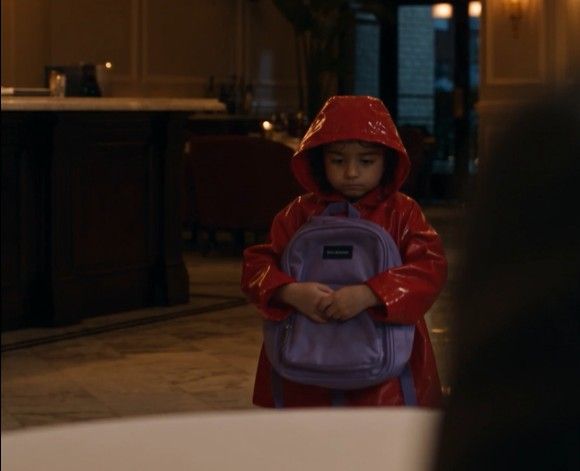
The first time Maya walked into Julian’s apartment—a limestone penthouse on Fifth Avenue that was beautiful and cold and smelled like nothing—she stood in the doorway and said, “It’s very quiet here.”
“I know.”
“Don’t you have a hamster?”
“No.”
“Mommy says hamsters are a lot of work.”
“Your mother is right.”
Maya walked to the living room window and looked out at Central Park. The snow was falling, dusting the trees, turning the city into something softer.
“You need plants,” she said. “And a picture on the wall. And maybe a rug. This floor is too shiny.”
Julian looked at the floor he had chosen with an architect who charged four hundred dollars an hour.
