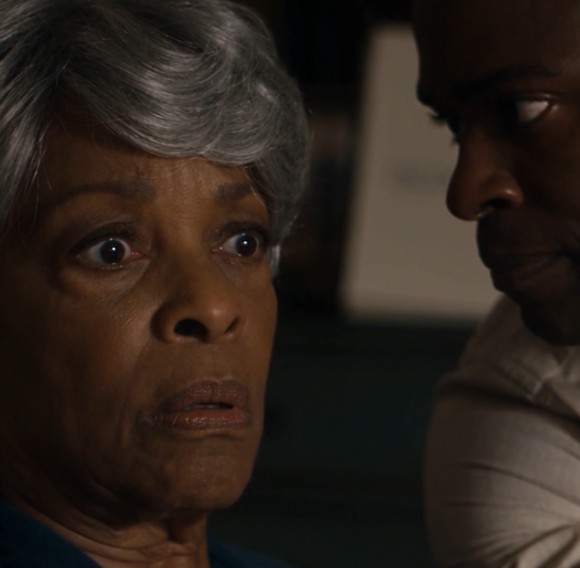
“Not yet.”
His shoulders sank, but he nodded again.
“Find a place where no one knows your name. Learn how to follow instructions from someone younger than you. Learn how to accept correction without turning it into humiliation. Then come back.”
“How long?”
“Until you stop counting.”
He looked at the photograph.
“And if I never come back?”
“Then you will still have learned something useful.”
A tear slipped down his cheek. He did not wipe it away.
Sarah reached for his hand.
It was the first time she had touched him since the day he took the key.
His fingers closed around hers carefully, as though she were the fragile one.
“I love you,” he said.
“I love you too.”
The words did not solve anything. They did not make the house safe by themselves. But they were true, and truth was the only material Sarah trusted enough to build with.
A year passed.
Calvin Rusk was convicted of fraud, forgery, and attempted theft. His licenses were revoked, his accounts were seized, and the court ordered restitution from the assets he had hidden under false names. The judge read aloud the names of the Bellweather workers whose savings he had tried to take.
Calvin did not look at Sarah.
Jessica pleaded guilty and entered a restitution program. She worked in a community kitchen during the week and attended counseling on weekends. She sent Michael one letter, then another. He answered the second. Their conversations remained difficult, but they stopped pretending that love could survive without accountability.
Michael found work at a small repair shop owned by a man who had never heard of Sarah or Bellweather. The owner was twenty-six, impatient, and unimpressed by Michael’s family history. Michael stayed.
He came to Bellweather once a month, but he never entered the executive office. He worked beside the machine technicians, ate lunch with the newer employees, and took notes when people corrected him.
On the first anniversary of the attempted sale, Sarah returned the brass key to him.
They stood in the old cutting room beneath the dusty lamps. The worker council had gathered in a semicircle. Mrs. Price sat in the front row, wrapped in a red shawl.
Michael looked at the key but did not take it.
“What is this for?” he asked.
“The archive room.”
“Why give it to me?”
“Because you asked what you signed.”
He looked at Sarah.
“I signed away the thing I never understood.”
“Yes.”
“And now you want me to keep the records?”
“I want you to know what you almost destroyed.”
Michael held out his hand.
The key rested in his palm.
It looked smaller than he remembered.
Sarah faced the council. “The archive will be opened every Friday. Anyone may read the ledgers. Anyone may ask how the trust works. No one should ever again be able to stand in this company and claim that ignorance gives them permission.”
Mrs. Price rose slowly. She crossed the room and placed her hand over Michael’s.
“You will not inherit this,” she said. “You will serve it.”
“I understand.”
