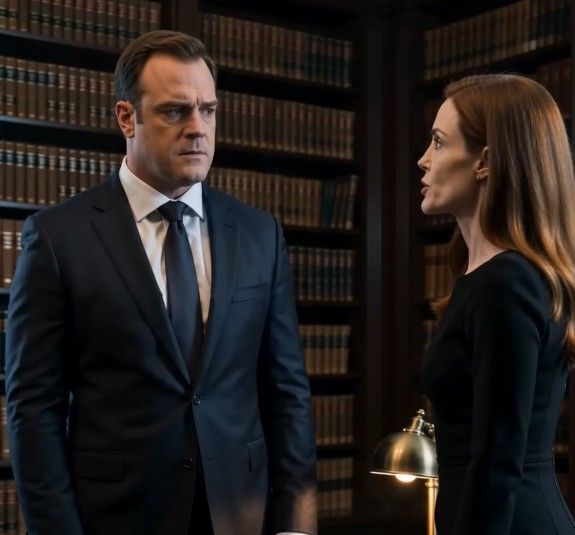
Vanessa sat down without being asked.
James unfolded the pages. Michael’s handwriting was uneven near the end, but unmistakable. He wrote that he had discovered payments leaving an account connected to a small investment he and James shared. The transfers did not go to Grant. They went to a consulting company registered to Vanessa.
James looked up.
Vanessa whispered, “Let me explain.”
He raised one hand. “After I read it.”
Michael’s letter did not accuse her of stealing. It described what he had verified: dates, amounts, account numbers, and copies stored on the drive. He had confronted Vanessa once. She told him the payments were repayment for money she had advanced to James during a difficult year. Michael could find no record of that loan.
Then came the part that changed James’s grief into something sharper. Michael had planned to speak with him after returning from a medical appointment. He died before that conversation happened.
James inserted the drive into the old laptop on the desk. The folders contained statements and emails. One message from Vanessa to Grant referred to the consulting company as “our exit fund.”
James read it twice.
Vanessa began crying. She admitted that Grant had helped create the company. She and Grant had been planning to leave their relationships, and the money was intended to give them a financial cushion. She insisted she had meant to replace it before James noticed.
“You took money connected to my brother and me,” James said, “and planned to disappear with him.”
Vanessa did not deny it.
The funeral insult returned to him with new meaning. Her impatience with his grief had not merely been cruelty. Michael’s death had frightened her because the person who had discovered the transfers was gone, but the evidence might not be.
James called an attorney before doing anything else. The next morning, copies of the files were preserved. The shared investment account was frozen against further withdrawals, and a forensic accountant reviewed the transfers.
Grant contacted James two days later. He claimed Vanessa had exaggerated his involvement. James did not argue with him. He forwarded the message to the attorney.
The records showed that Grant had helped establish the consulting company and had received part of the transferred money. Faced with the documentation, he returned what remained under his control. Vanessa agreed to a settlement requiring repayment of the rest and relinquished any claim to the investment account during the divorce.
James did not expose them publicly. He did not need an audience. Consequences arrived through signatures, bank records, and the end of a marriage that could no longer survive what had been hidden inside it.
The hardest part came after the legal work quieted.
James returned to Michael’s desk alone. For weeks, he had thought of the envelope as his brother’s final warning. Then he reread the last paragraph of the letter.
Michael had written about James, not Vanessa.
Do not let what she did become the only thing you remember from this year. You have a habit of carrying other people’s damage as if it proves something about you. It doesn’t.
James covered his face with both hands.
He had spent the weeks since the funeral trying to solve betrayal because betrayal gave him something to do. Grief was harder. Grief could not be cross-examined or organized into evidence.
He began visiting Michael’s grave on Sunday mornings. Sometimes he spoke. Sometimes he simply sat nearby with coffee and let silence remain silence.
Months passed. The divorce became final. Vanessa moved away and continued making the agreed repayments. Grant disappeared from James’s life entirely.
James kept the flash drive but stopped opening it. Instead, he framed one page of Michael’s letter—the paragraph that reminded him not to turn another person’s choices into a verdict on his own worth.
On the first anniversary of Michael’s death, James invited a few relatives to the house. There were no speeches. They cooked Michael’s favorite meal and told stories that had nothing to do with the money Vanessa took.
Late that evening, after everyone left, James returned to the desk.
He opened the drawer where the envelope had been found and discovered a photograph tucked beneath the liner. It showed the brothers as teenagers, muddy from a summer storm, both laughing at something outside the frame.
On the back Michael had written, years earlier, “For when you forget we had more good days than bad ones.”
