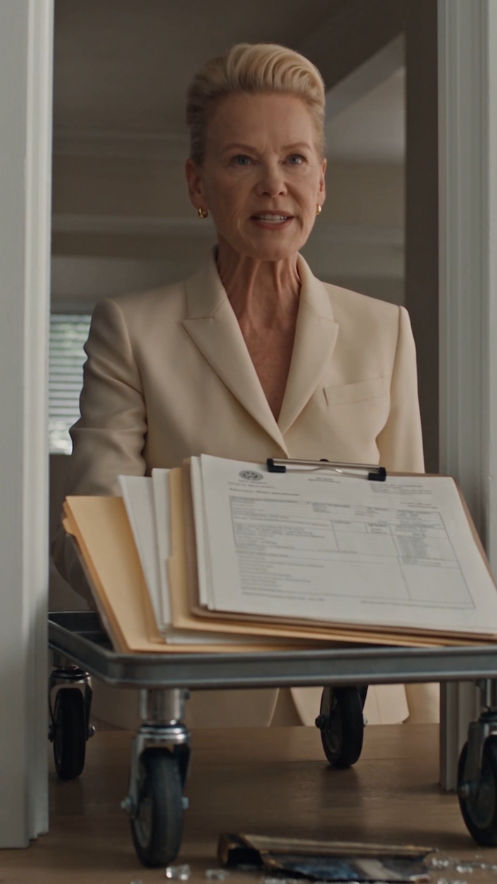
Victoria accepted the material through a documented transfer. Vanessa stared at her own hands. “I want to correct what I said publicly, but Mom says if I do, she’ll never speak to me again.”
“I won’t tell you that telling the truth is painless,” I said. “I can tell you that a lie doesn’t get kinder because you keep repeating it.”
The following week Vanessa posted a correction. She stated that the house belonged to me and that she had had no evidence for her accusations. She did not dramatize her apology or ask me to praise her. Her followers were not impressed. Some called her a coward, others accused her of participating in the scheme, and she shut down the account for a while. It was the first consequence she accepted without demanding someone else bear it.
Brandon was less willing. He gave a statement claiming the moving trucks were a misunderstanding and that everyone believed Ryan had permission to house his mother. Then the rental company produced his booking notes. Under special instructions he had written: Owner may object. Do not unload until gate is open. Victoria placed that line on the table during a meeting with the investigators, and the room went silent.
Weeks stretched into months. The financial records traced part of the loan advance into a series of related businesses controlled by Patricia and Brandon. Some money had paid old creditors; some had supported their expensive lifestyle. The figures shocked me, but their pattern did not. This was how the Montgomery family functioned: promises first, someone else’s resources second, accountability never.
Ryan’s own records were the hardest to read. Emails showed that he had challenged the guarantee after it was drafted, not because it was fraudulent, but because he feared I might discover it before the divorce. In one message Patricia had written, She thinks everything is hers because of a piece of paper. Ryan replied, Just make sure the lender doesn’t contact Madison directly.
I read those words in Victoria’s office, with rain tapping at the windows. Until then, I had allowed myself to imagine that Ryan was weak rather than cruel, a passive man pushed by a domineering mother. The email did not let me keep that comforting distinction. He had identified the danger, made a calculation, and chosen himself.
He asked to see me. Against Victoria’s advice for direct personal contact, I agreed only to a scheduled meeting in her conference room with counsel present. Ryan arrived without the polished confidence that once made him so attractive. His expensive suit hung loosely on him. He kept looking at a glass of water he did not touch.
“I never wanted your house taken,” he said.
“You wanted it available to rescue your family if the investment failed.”
He closed his eyes. “I thought it would work.”
“And if it didn’t, who was supposed to lose their home?”
He said nothing. I had wanted a confession for so long that when it finally appeared in his silence, it felt almost weightless. There was no perfect sentence that could reverse five years of being asked to doubt my own boundaries.
“Do you remember the first time you told me you admired my independence?” I asked.
He looked up.
“At that fundraiser. You said you weren’t intimidated by it. But every year afterward, you asked me to make myself smaller so your family could feel bigger.”
His mouth twisted. “I did love you.”
“I believe you loved parts of me. I cannot accept that as an excuse for what you did to the rest.”
Ryan wept. I stayed seated. When the meeting ended, I walked to my car without turning back. For the first time, I did not confuse another person’s suffering with a command to save him.
Patricia refused every opportunity to give a truthful account. Through counsel she alleged that I had verbally authorized the guarantee, despite records showing I was abroad on the signing date and had specifically objected to the investment brochures. She threatened a civil claim for improvements she claimed the family had made to my house. The invoices she submitted included work I had paid for myself. Victoria answered with bank statements, contractors’ receipts, and photographs dated before the marriage.
Eventually the financing company pursued recovery, regulators examined the investment representations, and prosecutors reviewed the evidence of false statements and signature forgery. I did not know how the criminal process would end when it began, and I learned to stop counting on a dramatic courtroom speech. Accountability arrived instead through months of documents, sworn testimony, and the exhausting discipline of telling the same truth accurately every time.
At a hearing the following spring, Patricia testified that she believed the property was part of the family estate. Asked why she had instructed movers to carry furniture into a locked house, she replied that my objections were emotional. Then counsel presented a letter from Victoria, sent before the divorce was final, explaining in plain language that I was the sole owner and that no Montgomery had permission to occupy it.
Patricia recognized her own reply beneath it: We are coming anyway.
She stared at the words for so long that the judge had to repeat the question. In that silence, I understood that her power had depended upon turning the world into a room where she controlled the volume. Here, volume did not change what a document said.
The civil litigation ended with an enforceable judgment against the responsible parties and orders barring further interference with my property. The venture was wound down. Assets were sold to satisfy legitimate claims, and Patricia lost the luxurious residence she had boasted about for years. In the separate criminal matter, Ryan accepted responsibility under a negotiated plea after cooperating with investigators; Patricia and Brandon faced their own proceedings. Their reputations did not collapse because I had called them names. They collapsed because their own correspondence, signatures, and transactions could be examined.
One evening Vanessa appeared at my gate carrying a small box. She called first and asked permission to come in. I considered that request longer than either of us expected before opening the gate. She looked around the garden as though seeing it for the first time.
“I found these in Mom’s storage unit,” she said. “They belong to you.”
Inside were place cards from my wedding, two silver napkin rings my mother had given me, and a framed photograph of my parents. Patricia had removed the items during a holiday visit and told Vanessa they were family heirlooms. I held the photograph against my chest. The gesture was small, but it returned something that had never been hers to take.
Vanessa apologized again, this time without an audience or a phone. She told me she had begun working at a community center, far from the family image she had cultivated online. “I don’t know if you can forgive me,” she said.
“I can believe you’re trying to change without pretending the damage didn’t happen,” I replied. “You don’t need my permission to become more honest.”
