I installed a safer stove shutoff. I added a rail beside the back steps. I hired someone to clear snow instead of pretending my balance was still what it had been at fifty. I began using a medication organizer even though I had not missed doses, because it made mornings simpler.
Every change was mine.
That made all the difference.
Janet called a month after the Rosewood incident.
I expected an administrative question.
Instead, she asked how I was.
I laughed. “Do you want the polite answer?”
“No.”
So I told her.
Before we ended the call, she said Rosewood was starting a resident-rights advisory group that included community members and family advocates. She wondered whether I might join.
My first reaction was absolutely not.
Then I thought about the dining room.
About how quickly concern can become control when older people are treated as problems to solve.
I said yes.
The first meeting was uncomfortable.
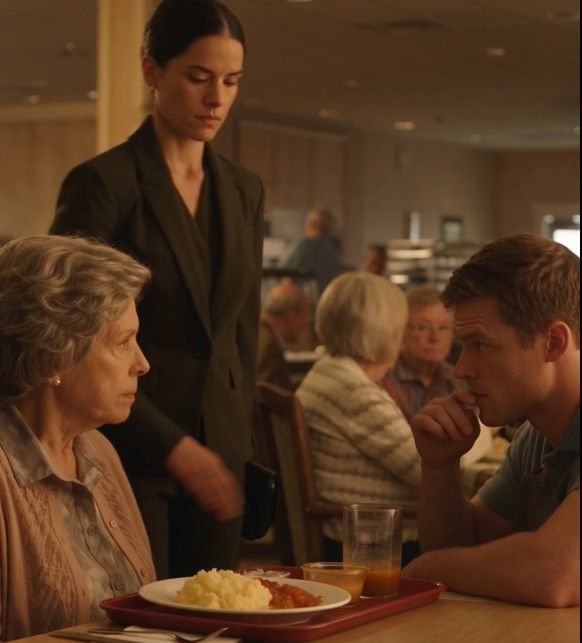
I sat in the same building where Melissa had knocked my tray to the floor and tried not to feel trapped by the carpet pattern. Then an eighty-one-year-old resident named June complained that staff moved her furniture without asking because they considered the change safer.
I knew exactly why she was angry.
We changed the policy so safety recommendations required documented resident discussion except in emergencies.
Small rule.
Large dignity.
By then, I had learned to answer one question whenever anyone offered a solution: Did I ask for this? If the answer was no, the conversation had to begin there. Concern could open a door. It could not carry me through it.
October third arrived six weeks after the day at Rosewood.
The date had lived in my head because someone else had typed it into a form as the day my life would supposedly be relocated.
Daniel called the night before.
“Do you want company tomorrow?”
I knew he remembered.
“Yes,” I said. “At ten.”
He arrived at ten carrying work gloves.
I handed him a shovel.
We planted daffodil bulbs along the front walk.
