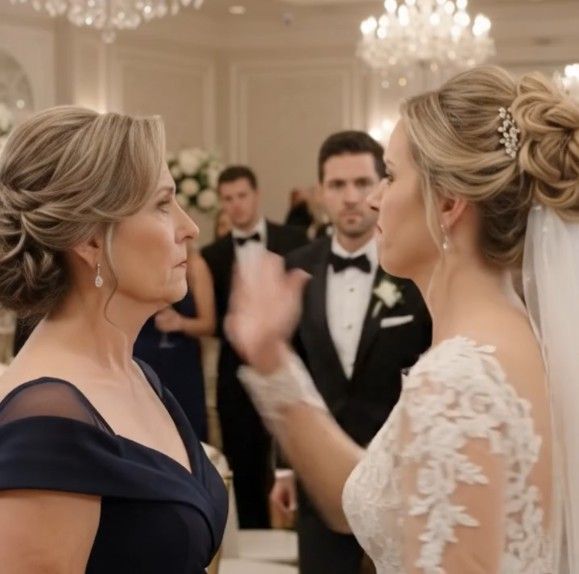
“And she used that.”
“Yes.”
He folded the page so carefully that I thought he might tear it. “I can’t stay married to someone who thinks that’s love.”
I did not celebrate his decision. Marriage, even a brief one, involves grief when it breaks. But I was relieved he could finally see the difference between protecting a partner and permitting cruelty. He met with an attorney to discuss the annulment or divorce options available, and they proceeded through a divorce when their circumstances made that the appropriate path.
Tiffany’s choices had consequences beyond the marriage. The estate provided records to a fraud investigator because the digital approvals contained false representations. After reviewing the evidence, the insurer and payment processor pursued reimbursement of disputed transactions from the people who had submitted them. Tiffany and Patricia eventually signed a settlement requiring restitution and acknowledging that they could not charge further costs to me. A judge entered the agreement as an enforceable order when they failed to make the first payments. Richard, who had repeatedly claimed the lavish expenses were his gifts, had to disclose his own role in approving and receiving those services.
At the same time, the wedding-planning company Tiffany had hoped to join withdrew an employment offer when it learned that she had falsely represented her authority to authorize payments. It was not a secret punishment arranged by me. The manager saw the documented conduct and decided she could not trust Tiffany with client budgets.
She called me one afternoon from an unfamiliar number. “You took everything,” she said.
I stood beside the sink watching rain move across the garden. “I didn’t make you strike me. I didn’t write the emails.”
“You could have kept it private.”
“The people handling those charges were entitled to know who authorized them.”
“Daniel would still be with me if you hadn’t interfered.”
“Daniel saw what happened with his own eyes.”
She began to cry. I felt sorry for the young woman beneath the fury, but pity did not make her version true. I told her that all financial matters needed to go through counsel, then ended the call.
Patricia sent a brief written apology months later. It described her own behavior without blaming my refusal to pay. She admitted she had encouraged Tiffany to pressure me because she wanted a wedding that impressed relatives she rarely saw. I kept the letter, but I did not reply. Some apologies can be acknowledged privately without becoming an invitation.
For Daniel, the hardest conversation came in late winter. He stood in my kitchen while I made vegetable soup and asked why I had always paid his emergencies so quickly.
“I thought you needed help,” I said.
“I did, sometimes. But sometimes I was embarrassed to admit I hadn’t planned. I knew you’d fix it, so I kept avoiding the hard work.”
I stirred the soup and watched a curl of steam rise toward the ceiling. “When your father died, I was terrified of failing you. Every bill I covered felt like proof that I could still protect you.”
His voice softened. “I never knew you were frightened.”
“I didn’t want you to.”
He went to the cupboard and found two bowls. “I wish you’d let me see that part of you.”
“So do I.”
We ate at the old oak table Thomas had built with a neighbor. Daniel told me he’d started keeping a monthly budget and was making the final payments on his own apartment. He didn’t mention the money I might give him someday. He asked about my garden and whether the furnace had been serviced. When I said it needed work, he offered to recommend a contractor, not to take control, but to help me compare estimates.
In spring I attended a small gathering of my friends to celebrate a decade since Thomas’s death. I had avoided commemorations before because they made his absence feel too definite. We shared photographs and remembered how he used to tell terrible jokes while carving the Thanksgiving turkey. Daniel arrived with a battered wooden recipe box.
“I found this when I was cleaning out the storage closet,” he said.
It belonged to Thomas. Inside were handwritten recipes, shopping lists, and small notes about ordinary days. Near the back was an envelope addressed to DANIEL—WHEN YOU GET MARRIED. The handwriting was unmistakable.
My son looked stunned. “Dad wrote me something?”
I opened the letter only after Daniel asked me to sit beside him and read it together. Thomas had written during one of his hospitalizations, when we still believed he would recover. He described how proud he was of Daniel’s tenderness toward smaller children and animals. Then he offered advice that took the air from the room.
A wedding is one day, son. Marriage is the way you treat someone on all the days nobody applauds. Choose a person who is kind when it costs something. And be that person yourself.
Daniel covered his face. For a long time I simply held him, the way I had on the afternoon the hospital called. Finally he looked up.
