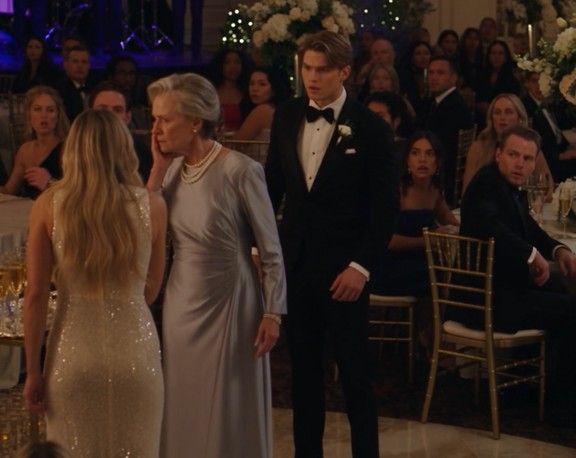
He arrived carrying no flowers. That was wise. An object could have given us something safer to look at, and there was already enough paper between us.
“The wedding photographs are full of people staring,” he said.
I waited. He swallowed and tried again.
“I keep thinking about how you must have felt standing there.”
“Are you thinking about that, or about how it looked?”
He bowed his head. “Both. I am trying to stop making the second thing matter more.”
It was an honest answer, though it hurt. I asked him when he had begun seeing every limit I set as something to persuade me out of. He said he had not noticed it becoming a habit.
“Every time you said it was only one day, you asked me to live with the cost afterward,” I told him.
“I know.”
“You knew I canceled my trip.”
“Yes.”
“You knew about the land.”
His eyes filled. “Yes.”
Ruth remained quiet. Her presence gave the room a shape I could trust. I did not have to defend my memory against a son who might otherwise have called it complicated.
Daniel told me Tiffany still believed I had provoked her by embarrassing her father. He had told her a slap was not an answer to embarrassment. Their conversation had become a fight.
“That is your marriage,” I said. “You must decide what you accept in it. I will not be the price of keeping it calm.”
He asked what I wanted from him. I wanted him to tell the truth, to stop asking for money, to repay what he could through a plan we would discuss after the account was settled, and to respect my decision not to see Tiffany while she blamed me for her actions.
He agreed too quickly. I stopped him.
“Think about it first. A promise that sounds good today and disappears next week is not useful to either of us.”
He sat for a long time. Then he agreed again, more slowly.
The following month brought paperwork rather than miracles. The final venue account matched the services I had authorized. The optional expenses remained with the people who had requested them. The incident record supported the account I had given.
I made a formal report about the assault after speaking with the lawyer. I did not pursue public spectacle. I provided the available evidence and let the proper process take its time. No one could promise me a result, and I did not make my recovery depend on one.
Through her own representative, Tiffany eventually accepted that she was not to contact me directly. The written arrangement about communication gave me distance while the report remained in the hands of those handling it. My house key was returned by Daniel.
That small key made me cry. He had carried it since he first moved away. Once it had meant he was always welcome. Now I needed it back before I could ever make welcome safe again.
Ruth stayed for the weekend. We changed the lock together, then spent an hour deciding where to hang a print I had stored in a cupboard because Tiffany had called it gloomy.
It was a field after rain, with a thin road disappearing behind a hill. My husband had bought it at a small local fair. I hung it above the chair where I read in the evenings.
The financial adviser helped me build a budget around the resources I still had. We worked out what could be saved, what needed to be protected, and how to rebuild the travel fund I had emptied.
I began with small deposits. At first they seemed almost insulting beside the wedding receipts. Then I remembered that the land had not grown into something precious because it was expensive. Its value had come from years of care.
I could care for my own life a little at a time.
Daniel made his first repayment on the date he had promised. I did not need him to replace forty-five thousand dollars overnight, and I did not pretend he could. We put a realistic agreement in writing. He would make regular payments toward the portion we had agreed he should repay, without taking out reckless debt to stage remorse.
He and Tiffany began counseling, but their marriage did not settle into peace. He told me only what I needed to know. Eventually they separated, and months later began the ordinary legal work of deciding what that meant for their shared life.
I did not celebrate. The end of his hope was still painful to me. But pain did not send me running to rescue him from the cost of facing it.
One afternoon he asked whether he could visit without discussing the wedding. I said yes, provided silence did not mean denial. He brought groceries he had bought from a list I actually needed, then cooked while I sat by the window.
He burned the first batch of toast. We laughed, unexpectedly, and both stopped as if laughter required permission after what had happened.
“You can laugh here,” I told him. “You just cannot laugh at what hurt me.”
He nodded. Later he washed the pan and dried it before putting it away. The quiet work mattered more than any grand declaration he had made.
One evening the venue manager phoned about the last document my lawyer had requested. Before ending the call, he asked whether I was feeling better.
“Yes,” I said. “Slowly.”
He told me the server who had brought the ice remembered me asking that the transportation continue. It had mattered to the staff, he said, that I had been concerned about the guests even then.
After we hung up, I thought about the difference between that choice and the choices I had made before the wedding. Both had involved paying for someone else. But one had been made freely, within a limit I could accept. The others had been made because I feared what saying no might cost.
