“I should have called before changing it,” he said.
“You shouldn’t have changed it at all.”
“I thought the house was going to be mine someday.”
“Someday isn’t today.”
He nodded. He did not blame Lauren this time. He said he had wanted to feel like an adult in the home, and that he had confused being allowed to live there with having authority over it. He also admitted he had been embarrassed to tell me that his work was unstable, so he and Lauren tried to make the house feel like their permanent base.
I listened. Then I told him that I could understand his fear without agreeing to the way he handled it. He needed to make his own plans. The beach house would remain mine for as long as I chose to live there. I would update my estate plan with my attorney so the eventual inheritance was clear, but I would not let anyone treat an expected future as a present claim.
He asked what the folder said about what happened if I became ill. I showed him the relevant page: I could appoint an agent to help me, and a successor trustee could manage the property only under written conditions. The folder contained no secret clause that let me “take back” something already stolen. It showed that the house had never been transferred. The clearest protection was the deed and the agreement we had all signed.
He read the page carefully. “Dad made me sign this.”
“Yes. You laughed at him.”
“I remember.”
“You thought he was being dramatic.”
“I was wrong.”
He looked at the shell bowl by the door. I told him I had found it in the box. He said Lauren had wanted to donate it, but he had kept it because he knew Dad would have been upset. That was the first time I learned he had tried to preserve one thing, even while letting the rest change. It did not excuse his silence, but it gave the silence a more complicated shape.
I called my sister after the attorney explained the records. She reminded me that Harold had always wanted the house to be a place the family could share, but he had never said sharing meant surrendering control. “You can invite them back when you are ready,” she said. “They don’t get to decide that for you.” I wrote the sentence on the motel notepad and kept it in my purse.
The beautiful surprise came when I turned the folder over and found a photograph taped beneath its back cover. It was a picture of Harold and me on the beach, both young enough to be sunburned, holding the first shell we had found after buying the house. On the reverse, Harold had written: “The house is yours. The view is borrowed. Keep choosing what matters.”
For years I had believed the folder was only about protecting property. The photograph showed why he had insisted on keeping it. He was not trying to turn the house into a weapon. He wanted me to remember it had been a place we chose together, and that I could choose how to live in it after he was gone.
I placed the picture beside his frame. Then I took the bowl outside and set it on the low wall by the back steps. The next morning, I walked along the shore with my coffee and picked up one small shell. I carried it home and placed it in the bowl.
The house became mine again through ordinary acts: the code changed under my authority, the deed checked, the written agreement honored, the bedroom returned, and the people who loved me learning to ask.
Before I returned for good, Melissa helped me make a checklist for the house: the deed, insurance, alarm contacts, and written permissions. I kept a copy with my sister and one in the folder. It was not fear that made me do it. It was the same care Harold had always shown, finally practiced by me.
Marcus and Lauren did not return to live there. They came for Sunday dinner once a month after asking. At first, Lauren stayed near the entryway and seemed unsure where to stand. I let her carry a dish to the table. She asked before using anything that belonged to me. I accepted the apology she gave, but I did not tell her the hurt had vanished.
Marcus began calling on weekdays. We discussed his work, the grandchildren, and the beach. We did not pretend the lockout had never happened. When he wanted to visit, he asked. When I wanted a quiet weekend, he accepted it. That small rhythm did more for trust than any dramatic promise could have.
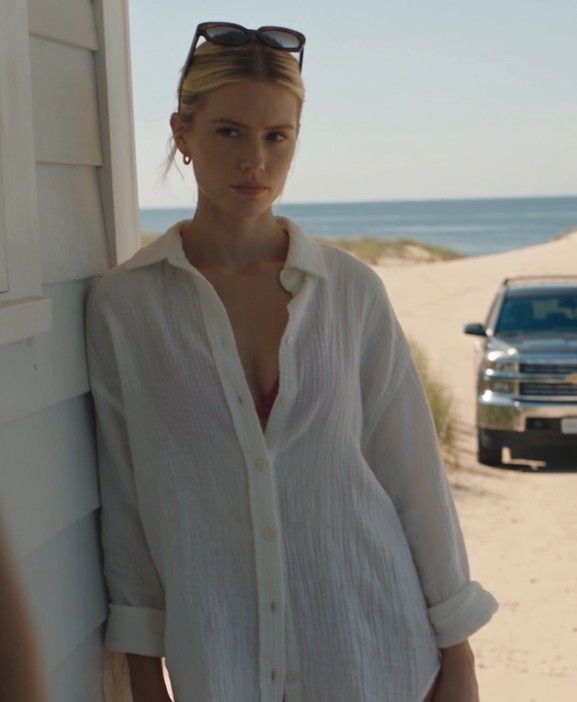
I eventually moved back into my bedroom. I brought the linen shirt with me and put it on the top shelf, not because I wanted to keep a reminder of the argument, but because it was mine. Harold’s photograph returned to the mantel. The beige pillows were replaced by the old blue ones I had kept in the hall closet. I chose the candles myself.
Months later, on the anniversary of Harold’s passing, Marcus joined me at the dunes. We scattered a handful of wildflower seeds near the path, where the wind would carry them. He apologized again for looking away at the door. This time I believed he understood what that moment had cost me. Forgiveness did not mean he could forget it; it meant we could talk about it without pretending I had imagined the hurt.
That evening, I opened the leather folder and placed the beach photograph in a new sleeve. The deed and agreement went back inside. The words on the cover still said BEACH HOUSE — DO NOT LOSE. I had once read them as a command to keep a building. Now I understood Harold had meant the life we had made there: the freedom to welcome people, the right to close the door, and the quiet confidence that home remained mine to offer.
The next Christmas, I invited Marcus and Lauren for dinner. I sent the time and asked them to confirm. They arrived with groceries and a small bouquet. Lauren paused at the threshold and waited for me to tell her to come in.
I entered the code. The panel turned green. Then I stepped aside and opened the door wide.
“Come in,” I said. “You’re welcome here.”
This time, welcome meant what it should have meant all along: a gift from the person who owned the door, freely given and never taken for granted.
