Before Samir left, he placed something on the table between them: the waterproof strip with her name on it. Investigators had finished processing it and Eli’s family had asked that Natalie keep it.
She did not know that.
On the back, under the smeared block letters, was another line she had never noticed because it had been folded inward.
IF SHE SAYS WAIT, WAIT.
Natalie laughed once, then covered her mouth.
The sentence was so absurdly specific that for a moment she could see Eli alive again, standing at the ward desk while she told him not to pull out his own IV because he was bored.
That was the beautiful cruelty of grief. The dead returned through details too ordinary to prepare for.
She framed the strip only after asking Eli’s mother.
“Keep it where somebody impatient can see it,” his mother said.
Natalie did.
A year later, a young lieutenant arrived in the ward demanding that one of his soldiers be released early for an exercise. Natalie pointed to the framed paper near her desk.
He read it.
IF SHE SAYS WAIT, WAIT.
“Who wrote that?” he asked.
“A private who learned the value of timing.”
The lieutenant looked from the frame to Natalie, then sat down.
Reeves heard about it and sent her a message containing only four words.
Brooks still outranks us.
Natalie smiled at her phone.
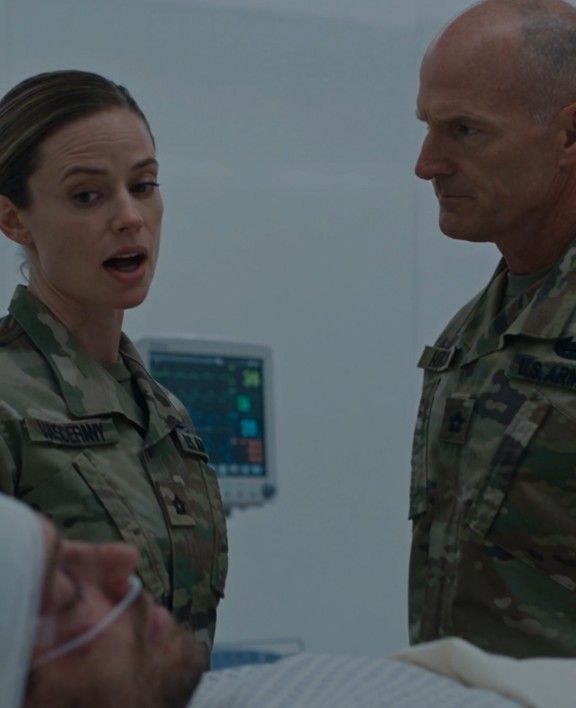
That evening, she walked through Ward 3 after the lights had dimmed. Every bed held a different story. Some patients had done brave things. Some had made terrible decisions. Some were simply unlucky. The monitors did not measure worth. They measured what the body needed next.
At her desk, the bent waterproof strip caught the low light.
Eli had written her name because he believed she would listen to the whole answer.
Natalie touched one finger to the frame, then checked the next patient’s chart.
No ceremony. No speech.
Just the work.
And, when the answer required it, the courage to wait.
