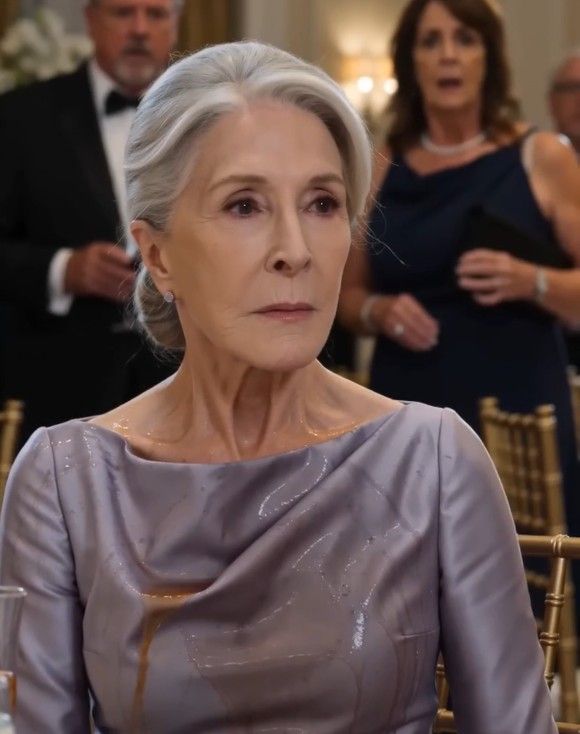
No one applauded. No one needed to. Daniel suspended the foundation’s partnership with the music program, and the remaining directors approved an external review and preservation of records. The evening’s donors received a careful correction: no unverified gift or facility guarantee would be treated as valid, and the program’s work would continue only on confirmed funds.
The legal consequences unfolded over months. Investigators reviewed the unauthorized account access, false pledge documents, and diversion of charitable funds. Amber ultimately admitted key facts in a negotiated resolution. She was removed from control of the foundation, required to repay misapplied funds, and barred for a defined period from managing charitable money under the terms of the judgment. The false commitment was voided, and the foundation was wound down under proper oversight. The record of what she had done became public, and her sought-after reputation for philanthropy could not survive it.
Steven’s failure to supervise the board also had consequences. He contributed toward costs the foundation had incurred through his negligence and completed governance training as part of an agreement with the remaining trustees. Several friends withdrew from his professional projects. He took responsibility without asking me to pay his share. Amber and Steven separated. I did not tell him whether to reconcile. I told him only that whatever he chose, he had to stop allowing someone else to borrow his conscience.
The children who used the music program did not need to carry our family scandal. Daniel and his board returned or redirected gifts according to each donor’s wishes and kept the ordinary classes running in the school hall. The proposed building was canceled. The piano tuner still came on Thursdays. An aging trumpet found its way into a beginner’s hands. The future was smaller than the brochure promised, but it belonged to the children rather than to an image of grandeur.
Rosa, whose honesty had mattered so much, was promoted to banquet supervisor at her catering company after the audit showed she had protected legitimate billing records under pressure. I sent her a handwritten note, not a check, thanking her for treating me with dignity when the people closest to me did not. She replied that her grandmother had once been seated by a kitchen door at a family wedding, and she’d never forgotten the look on her face.
The first conversation Steven and I had without lawyers took place in the little church hall where he had once rehearsed with the choir. Dust floated in the sunlight above rows of folding chairs. He had asked to meet me there because he didn’t want my living room to become the place where he apologized and immediately expected comfort.
“I handed you a napkin,” he said. “I saw Amber throw tea at you, and I handed her a napkin.”
I could still feel the chill of it against my dress. “You acted as though her feelings mattered more than what she did.”
“They did, in that moment. I was afraid she’d make a scene.”
“She had already made one.”
He nodded. His eyes filled, but he didn’t look away. “I wanted people to admire us. I let her turn your kindness into our story, and I didn’t care enough to see whether you were hurt.”
The specificity of his apology softened something I had held rigid for months. I told him I loved him, and that I would need time. He said he understood, then helped stack chairs for the evening’s class. It was ordinary work, and for once he did it without asking who might notice.
Daniel invited me to a small concert when winter came. I agreed to attend on the condition that my donation not be announced as a spectacle. He promised nothing extravagant. I arrived at the school hall in a simple blue dress and chose a chair halfway down the aisle. Steven sat one row behind me, asking permission with a glance before he came closer.
At intermission Daniel approached holding a thin file from the program’s archives. He said they’d been cataloging recordings after the fundraising confusion and had found something he hoped I’d want to hear. I expected another speech about gratitude. Instead he showed me a yellowing sign-up sheet from decades before, when the choir had nearly closed for lack of instruments.
In the margin, written in a teacher’s hand, was a note: Emergency instruments purchased with anonymous gift from Steven’s mother. I remembered writing that check after Steven’s first rehearsal, but I hadn’t told him. I wanted him to feel proud of the whole choir, not indebted to me for his place in it.
Daniel opened the file farther. There was a cassette recording from the following year’s concert, recently digitized. Steven, eleven years old, had introduced the closing song in a voice almost too soft to hear: “My mom says everybody deserves to be heard, even when they’re scared. This is for her.”
I put a hand over my mouth. The choir had sung that night, but I had been in the hallway helping a frightened child find his costume and missed Steven’s words. He’d thought I heard them. I had never known.
Daniel pressed play on a little speaker. Out came the thin, earnest sound of my son’s childhood voice, followed by the first uncertain notes of a song that gathered strength as the children joined. Behind me, the adult Steven bowed his head. When the recording ended, he said, “I wondered why you never mentioned it.”
“I wasn’t in the room,” I whispered.
He reached for my hand but waited until I offered it. “Then I’m glad you heard it now.”
For years I had feared our best moments were behind us, swallowed by ambition and silence. The recording told me that the boy I remembered had once understood my love perfectly. The man beside me still had work to do, but he could find his way back toward that understanding.
At the concert’s end, the children carried their music stands away and parents folded chairs. Steven and I stayed to help. Daniel turned off the bright overhead lights, leaving the warm wall lamps glowing. Nobody called me a donor or asked me for a pledge. A girl carrying a violin paused to thank me for holding the door.
Outside, the air smelled of cold leaves. Steven asked whether I would like to have soup with him the next Sunday. I told him yes, provided we cooked it together and cleaned up together. He smiled with relief, not entitlement.
We walked toward the parking lot while a few final notes drifted from the hall. This time there was a chair for me, a song I’d finally heard, and enough quiet between us for the truth to live without being covered by applause.
