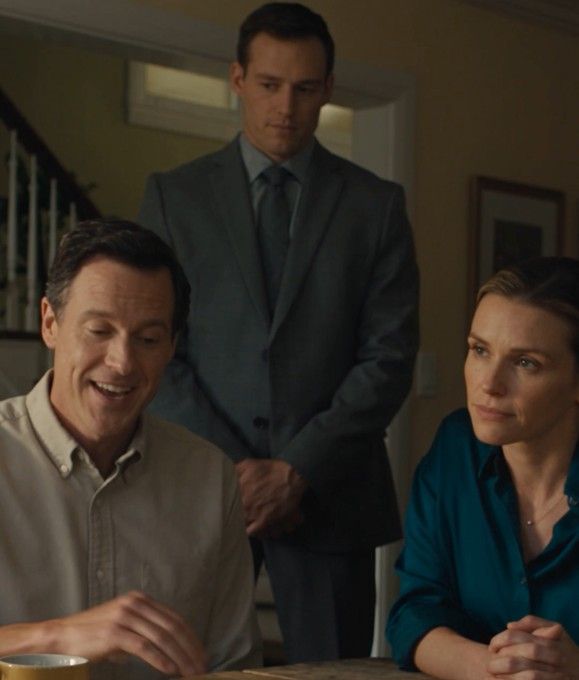
“I believed Mom would be happier,” he said finally. “And the house is a lot to manage. Claire’s brother offered to simplify things.”
“Did you also believe I’d be happier not knowing about the consulting fee?” I asked.
His silence was long.
Martin gathered his papers. He said he would suspend all work on the transaction until the situation was resolved and speak to his supervising broker about the file. My lawyer documented the statement and asked for written confirmation. I saw how unglamorous protecting a life could be: not a slamming door, but a record of who said what.
When Martin left, Claire rounded on Andrew. “You told me she’d agreed to all of this.”
He stared at the table. “I thought once the paperwork was done she’d see the advantages.”
Claire looked at me then. For once, the confidence she had worn while sorting my belongings deserted her. I could not tell whether she was sorry for me or frightened for herself. I did not need to decide that day.
Ms. Benton advised me to change the house’s access arrangements, inventory valuables, and keep copies of every notice. I arranged for the locks to be rekeyed and told Andrew and Claire that overnight visits required an invitation. They had homes of their own and did not need to use mine as an office.
Andrew asked if I was cutting him out of my life.
“No,” I said. “I’m cutting you out of decisions that are mine.”
It was an unfamiliar difference. I watched him struggle with it as we stood outside the lawyer’s building. Cars passed along the curb. People went to lunch, carrying paper bags and talking into phones. The world did not stop because a mother had finally contradicted her son.
I expected a storm of calls that evening. Instead, the house stayed quiet. I made soup, ate at the table alone, and walked through the garden at dusk. The rosebush nearest the fence had a broken stem. I found twine in George’s gardening box and tied it upright.
A week later, the written confirmations arrived. The proposed transaction would not proceed, and the relevant parties acknowledged my objection and withdrawal of authorization. Ms. Benton advised me to keep watching the public record and my financial statements for a while. She also helped me update my estate papers so that anyone entrusted with decisions in the future understood my wishes and the need for independent oversight.
I did visit Sunnyvale, alone. The staff were kind, the gardens tidy, and the dining room filled with laughter. A resident showed me the watercolor she had painted that morning. I could imagine a day when such a place might suit me. But that day had not arrived, and the choice, when it did, would be mine.
I began meeting my bridge friends again. One Wednesday, I told my oldest friend, Ruth, what had happened. I expected her to be shocked by the paperwork. Instead, she asked how long I had been making myself small so Andrew could feel certain of being right.
“Since he learned to talk,” I said, laughing before I could stop myself.
We both laughed, then grew quiet. Ruth squeezed my hand. She reminded me that the boy I had raised and the man he had become were connected, but not identical. I could love the boy without endorsing the man’s choices.
Before November arrived, I also had to face a truth about my own habits. I had left important conversations unfinished because I was afraid Andrew would stop visiting. In earlier years, after George died, I sometimes called my son to ask for help with simple things I could have done myself. It gave us a reason to talk. Gradually, I came to confuse needing his approval with having his affection.
I made a list of things I wanted to do simply because I enjoyed them. I booked a workshop at the library about preserving family photographs. I signed up for a gardening exchange. I invited Ruth to dinner and served dessert on my mother’s china, enjoying the familiar little clink as we set the cups in their saucers. These were not acts of defiance directed at my son. They were proof to myself that the life I had almost packed into boxes was still unfolding.
I also asked my doctor to review my current health needs without inviting Andrew to answer on my behalf. We discussed ordinary changes that might make stairs safer someday, and the doctor suggested exercises to keep my balance strong. The conversation was practical, not an announcement that I had ceased being capable. I went home and wrote down what I had learned. Good planning, I discovered, did not have to begin with another person’s desire to sell my house.
Andrew came by in November. He stood on the porch until I opened the door. He didn’t try the old key. He brought a bag of bulbs from a garden center and said he’d asked Ruth what I might actually enjoy receiving.
“I owe you an apology,” he said. “I was more interested in a solution that worked for us than in listening to you.”
I led him to the kitchen, where we sat across the same table that had once been covered with papers. He told me about financial pressure, about Claire’s brother’s promised quick return, about the way he’d convinced himself he was rescuing me because the alternative was admitting he wanted my house sold.
I listened. I did not rush to tell him it was fine. It wasn’t fine. He had tried to turn my trust into authorization. He had watched me pack George’s belongings and called it kindness.
“Will you ever forgive me?” he asked.
“I hope so,” I said. “But forgiveness won’t mean you get to make those decisions again.”
His eyes filled. He looked at the kitchen window and nodded. Before he left, he helped me plant the bulbs along the front walk. We worked mostly in silence. He asked before moving a pot. It was the smallest courtesy, and its absence had once seemed normal.
Claire sent an apology later, written in her own words, acknowledging that she had not been candid about her brother’s involvement. I replied that I appreciated her saying so and that rebuilding trust would take time. She did not return to sort my drawers.
Winter settled over Maple Street. I learned to use online banking alerts, organized the important documents in a locked drawer, and wrote down the names of people who knew my wishes. These were ordinary precautions, not a fortress. They made the house feel ordinary again.
On the first warm day of spring, I found Andrew kneeling beside the rosebushes with a packet of twine. He had called ahead and come at my invitation. “Dad always tied this one too tightly,” he said, then laughed at his mistake. “George did. I mean, he wasn’t my father, but he always treated me like I was his.”
