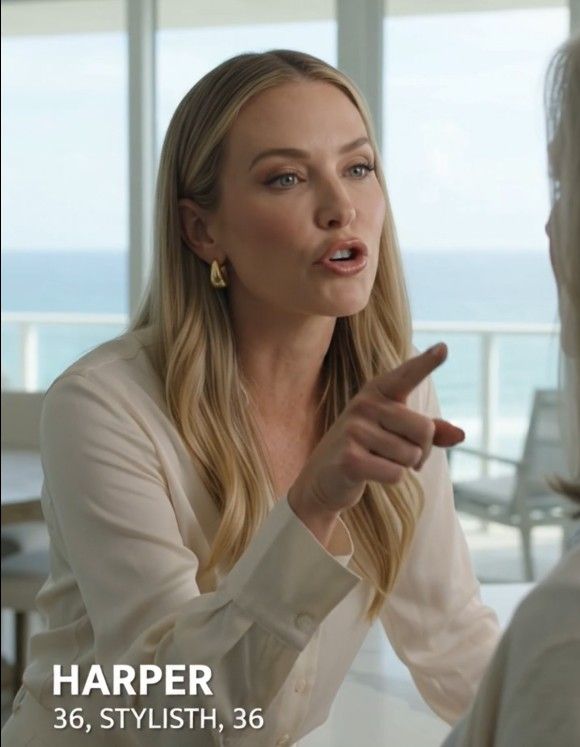
“No. I’m refusing to give you a building because I love my son.”
Mark visited a few days later, alone. He carried a little cardboard box that contained the temporary key tag, photographs Harper had taken, and a forgotten bracelet of mine she’d borrowed without asking. We sat at the oak table beside the windows. He looked older than he had on the day they arrived, and for once he didn’t comment on what my condo was worth.
“I knew about the pictures,” he admitted. “I didn’t know she’d already collected deposits.”
“Why didn’t you ask what the pictures were for?”
“I wanted to believe she had a sensible plan.”
“Even when the plan involved my home?”
He nodded, ashamed. “I was afraid we’d never afford a place at the beach. I told myself we’d make you proud by building something.”
I touched a knot in the oak tabletop. Thomas and I had once admired a table almost like it and walked away because we couldn’t afford it. “I would have been proud of you for asking,” I said. “I would have been proud if you found a business that didn’t require a lie.”
He stared at the sea. “Can I fix this?”
“You can fix your part. You cannot make Harper’s choices disappear.”
He signed a written acknowledgment that he had no right to use or share access to my condo. He agreed to cover the lock and security costs from his own account. The payment took him several months, and I accepted the installments without offering to cancel them. It was strange how hard that felt.
Meanwhile Brenda wrote me a letter. She didn’t defend her daughter’s behavior. She apologized for assuming the master bedroom was hers to use and for treating me like staff in a home I had furnished. She enclosed the cost of replacing the towels and offered to return a missing linen pillowcase she’d found in Harold’s luggage. The note ended, We would have left immediately if we’d known. But I should have asked you before bringing our bags inside. I hope you believe that.
I called her. We spoke awkwardly at first, then honestly. Brenda admitted that Harper often blurred requests and arrangements until family members couldn’t remember who had agreed to what. “We enabled it,” she said. “I thought it was confidence. I see now that sometimes it was taking.”
I did believe her, though belief did not mean inviting her back. She and Harold arranged their own visit to the coast that summer and stayed at a small inn. We met once for coffee. It was enough.
Harper’s business collapsed under the weight of the complaints and refunds. The professional photographer demanded the balance owed, and the platform permanently closed the account after confirming she lacked authorization for the listings. She tried to blame Mark in messages to potential clients, but he preserved their written conversations and refused to sign a false statement. Their marriage entered counseling. Eventually they separated, after Harper insisted that the real problem was my unwillingness to share and Mark answered that the real problem was deception.
I felt no pleasure when he told me. I remembered the young woman who had laughed at our first family dinner and baked a birthday cake for Thomas’s memory. There had been affection in her once, or at least the appearance of it. Losing trust was a kind of grief, even when distance was necessary.
One night, Mark drove to the condo and asked if we could walk on the beach. We went at dusk, barefoot along the waterline. Pelicans skimmed low over the waves. He kept looking down at our footprints, which the tide erased almost as soon as we made them.
“When Dad died,” he said, “I thought I needed to become the person who kept everything together.”
“You were in graduate school. You didn’t need to become anybody overnight.”
“You never asked for help. You just handled everything.”
“I thought that was how I protected you.”
He paused. “I learned to wait for someone else to handle things.”
The admission hurt because it contained some truth about both of us. “I should have told you when I was tired,” I said. “And I should have expected you to ask before helping yourself.”
He nodded. “I’m going to try to be different.”
I believed he wanted to. I also knew wanting would not be enough.
A few weeks later he returned with his own beach chair and a bag of sandwiches. He called ahead, as I had requested. We sat beneath a striped umbrella watching children dig a trench toward the sea. He didn’t ask for the code. He didn’t mention investments. When he left, he washed the dishes and carried out the recycling without being told.
In August the building held a residents’ meeting about unauthorized rentals. Evelyn invited me to speak if I wished. I was afraid of being seen as the older woman who had let her family take advantage of her, but I attended. I spoke about temporary codes, written permissions, and how shame can keep people silent when a boundary has been crossed. Several neighbors approached afterward. One confessed that her nephew had been using her parking permit for strangers; another wanted help understanding how to revoke an old guest code.
I began a little informal group with Evelyn and three residents. We called it Neighbors Looking Out. There were no dramatic speeches. We met over coffee and helped people write clear, kind instructions about keys, guests, contractors, and emergency contacts. The work reminded me of coordinating hospital departments: prevent a crisis by making responsibility visible before trouble began.
That September, on the anniversary of Thomas’s death, I opened a box I hadn’t touched since buying the condo. It contained postcards from our annual beach trips. On one of them he had drawn a clumsy picture of a balcony, the ocean a series of zigzag lines beneath it. I laughed when I saw his handwriting: For our future place, we need room for two chairs and absolutely no meetings.
Tucked behind the postcard was a second note, one I hadn’t noticed before. It was dated the year before he died. Barbara will always make space for everyone, he had written. My wish is that someday she makes space for herself. Below it he had listed the name of the hospital’s staff assistance fund, where we’d sometimes donated anonymously. He’d added, If we ever have more than we need, help the people who rarely ask.
