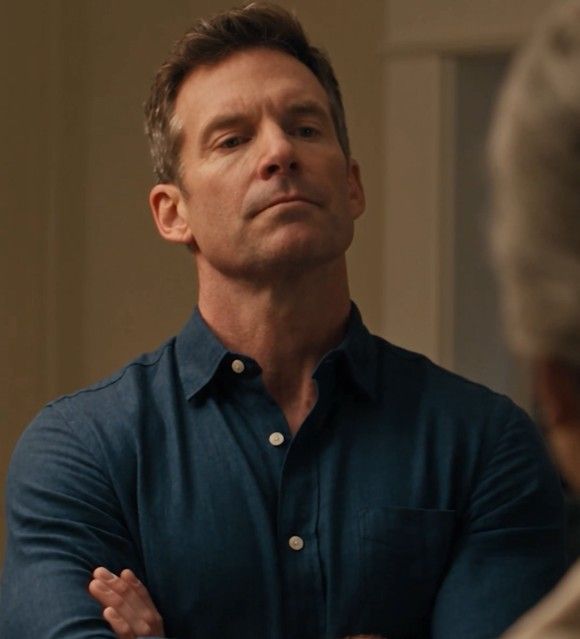
He skimmed the letter, then shook his head. “Dad would never have treated me this way.”
That was when I felt the anger rise sharpest. Harold had spent years working overtime to cover Daniel’s mistakes, and I had continued in his place because I thought that was what he’d want.
“Your father loved you,” I said. “He also wanted you to become someone who could stand on your own feet. Don’t use his memory to demand money he is no longer here to discuss.”
Daniel pushed back his chair. Vanessa caught his wrist, not to restrain him, but to ask him to stay. He looked from her to me and sat down again, breathing hard.
I finished the meeting by giving them a date to return written questions about the housing arrangement. I didn’t argue over the exact day I might want the house back. Those decisions belonged in a proper process, where the rules were clear enough to protect everyone.
For several weeks Daniel wouldn’t speak to me. He sent one message claiming I’d chosen paperwork over family. I answered that paperwork couldn’t replace love, but it could prevent assumptions that had already damaged it.
Meanwhile I did something I hadn’t done in years: I made plans that didn’t depend on Daniel’s business succeeding. I booked a gardening class, took a short trip to visit a friend, and reviewed my retirement budget without leaving an invisible line for the next emergency.
The absence of financial crisis didn’t make me carefree overnight. I’d spent decades expecting a phone call to demand action. Sometimes, when the phone rang, I still stood up before seeing who it was.
My friend Ruth laughed gently when I told her. “You’ll have to teach your body that not every ring is a bill,” she said.
In early spring, Vanessa asked to meet me alone. We sat on a bench outside the community library while children ran past us with backpacks. She looked tired, her hair tucked carelessly behind her ears.
“Daniel has started working with an accountant,” she said. “The business may have to close. He isn’t handling it well.”
I listened without offering a check. That was harder than I expected. Money had been my quickest way of showing concern because it allowed me to avoid difficult conversations.
Vanessa admitted she’d been afraid to challenge Daniel in front of the children. She grew up in a house where arguments escalated quickly, and laughter had become a nervous reflex. She wasn’t proud of it.
“I should have stood up,” she said. “Instead I made your birthday even lonelier.”
Her apology mattered, especially because it didn’t ask me to excuse Daniel. I told her I hoped she and the children were safe and that I would help them find support if she needed it. I wasn’t offering to erase his decisions financially.
She said she’d already arranged counseling for herself and that she and Daniel had spoken to a family therapist about how anger affected their household. He had agreed to attend, though reluctantly.
Our housing agreement was finalized after several revisions. It set reasonable payment expectations, rules for property maintenance, and a clear process for either side to end the arrangement with lawful notice. The children stayed in their familiar rooms while their parents worked out a realistic budget.
I didn’t demand gratitude for letting them remain. I wanted them to understand that stability was a responsibility they had to share, not an endless subsidy granted by an elderly woman they could humiliate.
One Saturday Noah called me from the park. He asked whether he could come over to learn Harold’s chess opening. His grandfather had taught him the first moves years earlier, and he was worried he’d forgotten them.
I said yes and asked him to have his parents confirm the visit. He arrived with a battered chessboard and an apologetic smile that made my chest ache.
“Dad said you two are fighting,” he said as he arranged the pieces.
“We’ve disagreed about important things,” I answered. “That doesn’t mean you have to choose a side.”
He studied the board. “I didn’t like what happened with the cake.”
“Neither did I.”
He moved a pawn, then looked up. “I thought if I said something, he’d get angrier.”
I could barely speak for a moment. “You were a child at a difficult dinner. It wasn’t your responsibility to stop it. I should have made sure you knew that sooner.”
We played two games. He won the second, using a move Harold would have recognized instantly. When he laughed, I heard a bright echo of my husband’s voice from years ago.
Lily visited the next weekend. She wanted to bake but refused to make lemon cake at first. I asked whether she was frightened of ruining it, and she shook her head.
“I thought you wouldn’t want to remember,” she said.
I opened the drawer and showed her the recipe. “Remembering Harold doesn’t have to mean remembering the worst thing Daniel did. Your grandpa gave us better memories than that.”
