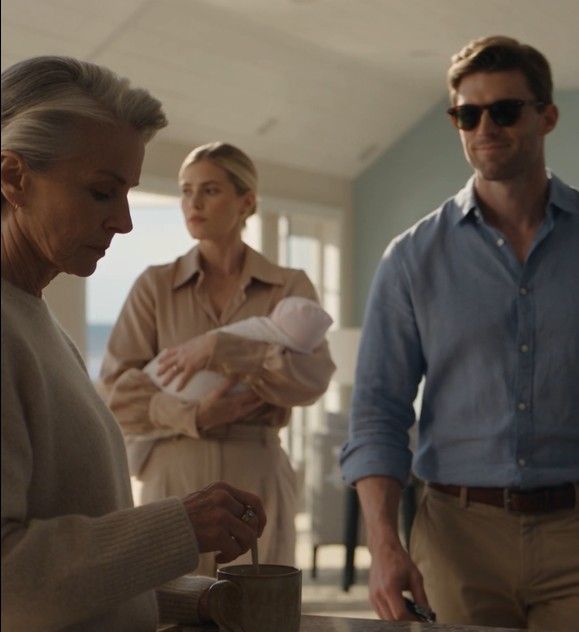
“How far behind?”
“Two months.” His eyes avoided mine. “The landlord’s being ridiculous about it. We’ve lived there for years.”
Kendra shifted her weight. “There’s paperwork. That’s all.”
“What kind of paperwork?”
“A notice,” Preston admitted. “We have a date to work something out.”
I set my coffee on the terrace railing. The cup was no longer hot. “What date?”
“Monday.”
It was Saturday morning. I pictured them arriving with luggage on Monday evening if I had agreed today. Their plan had not included giving me a chance to prepare because they had never considered that I might refuse.
“How much do you owe?” I asked.
Preston said a figure that made me close my eyes briefly. It wasn’t impossible money, not compared with the property I had just bought, but it was much more than two ordinary rent payments. There were fees, he claimed. A disputed repair. A charge for ending an earlier payment arrangement.
“Can I see the notice?”
His chin came up. “Do you need proof before you’ll help your own son?”
“I need facts before I make a decision.”
For a moment his face looked exactly like his father’s when I asked to see our joint account statements. I used to apologize then. I did not apologize now.
Lila began to fuss. I reached for her, asking permission with my hands rather than assuming it. Kendra hesitated and then transferred the baby to me. She was warm, heavy with sleep, completely innocent of this negotiation. I walked slowly around the terrace until her breathing steadied.
“I can love my granddaughter,” I told them, “without letting you move into my home.”
Preston stared into the garden. “You don’t understand what we did to get here.”
“Then explain.”
The story arrived in reluctant pieces. A new vehicle, purchased because Kendra believed their old car was beneath the image she presented to clients. An investment in a subscription service Preston had tried to launch with a friend. Money drawn from savings to cover costs while he waited for the business to pay. No budget. No conversation when the savings began to shrink.
The landlord had apparently offered a repayment plan after the first missed rent. They made one installment, then stopped. They had told each other there would always be another month.
“Why didn’t you talk to me sooner?” I asked.
“Because you’d judge us,” Kendra said. Her voice trembled, though whether with anger or fear I couldn’t tell. “You look at every purchase as if it’s a moral test.”
I thought of the apartment behind the laundromat, of Kendra’s eyes sweeping its chipped cupboards. “I remember being judged for renting,” I said. “Apparently the judgment was never about money. It was about who had it.”
Preston drew a hard breath. “All we need is somewhere to land. Six months. Maybe a year.”
“You told me you were taking the house. You didn’t ask me if I could help you find somewhere to land.”
I gave Lila back. The baby stirred and tucked her face into Kendra’s shoulder. With her between us, nobody spoke for a while.
I offered them water and asked for a copy of the lease, the notice, and their current income. Preston refused. He said my conditions were insulting. Kendra stood as if the conversation were over. Their SUV backed down the drive fifteen minutes later, the tires scattering white gravel.
The villa should have felt quiet. Instead, I found myself listening for the gate, expecting my son to return and try a different tone. I washed the untouched water glasses and put away the cup that had cooled on the railing.
At the sink, I saw my grandmother’s china reflected in the glass cabinet. She had been the first person to tell me that kindness could have a lock on its door. I had believed her in theory, but I had never practiced it with Preston.
I called a local locksmith and asked him to check the service entrance. Preston knew the old garage code from a visit during closing week, when I had briefly shown him the listing on my phone. Although the access had already been updated, I wanted to be certain nothing I had overlooked could be used casually.
