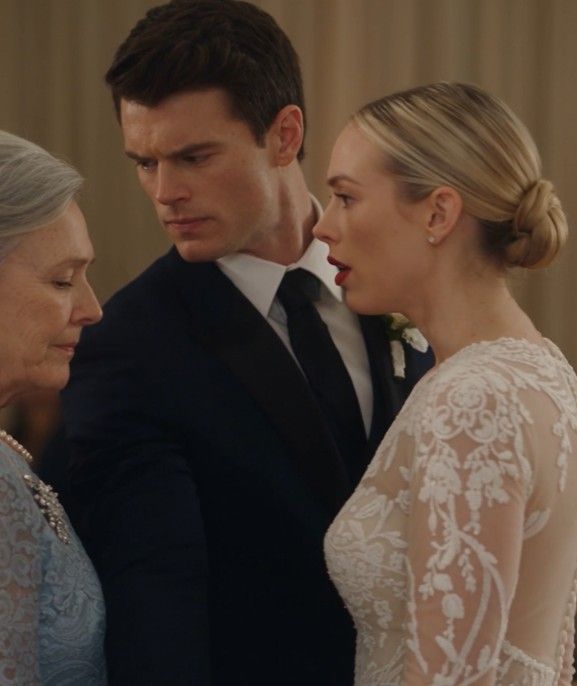
I told him I wanted the incident documented accurately. We gave a statement later that afternoon, provided Evan’s contact information, and saved the messages that began arriving from guests. Some were kind. Some were not. A cousin demanded that we stop humiliating the bride. A distant friend asked whether the entire thing had been staged. One message simply said that the photographer should delete any unflattering pictures because families deserved privacy. I did not answer them. I had spent seventy-seven years being told to keep peace by keeping quiet. Peace was not what happened when everyone agreed to conceal a bruise.
Noah spoke with the venue manager about canceling the remaining celebration and ensuring guests were informed without rumors of an emergency. He asked the manager to release staff according to their normal arrangements and to keep the contracts and incident records. I learned later that the venue followed its cancellation policies and that the vendors were paid for services already provided. Noah did not have the power to make all the invoices disappear because he was upset. The practical costs were real. I watched him accept them without turning them into my debt.
That evening he came to my house with a paper bag of soup and a small bunch of wildflowers from the grocery store. My wrist was elevated on a pillow. He moved a lamp closer so I could read. Before leaving he picked up the photograph of himself at six years old, standing on a chair to stir pancake batter. “Do you remember how you taught me not to be afraid of making a mess?” he asked. I laughed. He had tipped the bowl over twice. “You told me a mess can be cleaned, but a mean word stays in somebody,” he said. “I think I forgot that for a while.”
I asked him what he meant. He sat down and admitted that Brittany had made comments about my clothes for months. She had called my house quaint with a smile that made the word sound like pity. She had asked whether he wanted me to attend the rehearsal dinner because I sometimes spoke too slowly in conversations with her colleagues. Noah had corrected her once, then avoided the subject because he hated arguments. He believed he could keep everyone comfortable by managing the moments when we met. “I thought I was protecting you,” he said. “I was really protecting myself from having to confront her.”
His admission hurt. I told him so. Then I thanked him for not wrapping the truth in excuses. Children grow up and make choices we cannot make for them. Sometimes those choices break our hearts. Sometimes they reveal strengths we thought had disappeared. Noah took my uninjured hand. I did not tell him everything would be all right, because I couldn’t know that. I told him he could face the next decision honestly. It seemed a better blessing than the perfect wedding speech I had practiced in my kitchen.
Brittany sent flowers the following morning. The card said she regretted the misunderstanding. Noah wrote to her that a physical injury and a deliberate exclusion were not misunderstandings and asked her to stop contacting me directly. She replied that he was exaggerating to make her look cruel. Then her mother called me three times. The third time I answered and said I was recovering, that we would deal with any factual or legal questions through appropriate channels, and that I had nothing further to say. My voice shook. I said the words anyway.
Evan provided the requested photographs to Noah and, when appropriate, to the person documenting the incident. I examined them only once. The series did not read minds. It could not tell anyone what Brittany had been thinking. But it clearly showed her hand on my arm before I lost balance, her grip tightening as I turned, and my fall from the platform. Several guests supplied accounts consistent with the images. A police report recorded the allegation and the available evidence. Nobody promised me a trial, an arrest, or a result by Friday. The truth had entered a process whose pace I did not control.
A lawyer explained to Noah that having a wedding reception canceled did not automatically erase a marriage. He discussed the options that might apply where the ceremony was legally recorded, including formal separation or dissolution, and cautioned against making promises on social media. Noah took his advice. He canceled the honeymoon and moved his belongings temporarily into a small rental. Brittany continued to ask him to meet privately. He answered that he would discuss practical matters with counsel present or in writing. None of these steps felt romantic. All of them felt adult.
I received a visit from my oldest friend, Ruth. She helped wash dishes because the splint made simple tasks clumsy, then sat beside me with tea. Ruth had once watched me rehearse a conversation with a difficult employer for three days before I dared speak. She studied the pale blue dress hanging behind my bedroom door. Its sleeve was slightly torn near the shoulder. “Are you going to throw it away?” she asked. I said I didn’t know. She looked at the fabric a moment, then said, “You wore that because you wanted to stand beside your son. The dress didn’t do anything wrong.”
I had forgotten how much I loved that blue. My mother had always worn the color when she wanted to feel brave. Her pearl earrings were still in a velvet box on my dresser. Neither had been expensive, but I remembered seeing them on her when she attended my school plays, folding chairs scraping in a room full of parents. She had never asked whether our little stage looked elegant enough for her. She had clapped until her hands were red. Remembering that made me angry all over again, and this time I let the feeling stay.
On the ninth day after the wedding, I tried to button my blouse with my injured hand and found myself crying over a task I had done without thinking for decades. A sprain can be ordinary and still change the rhythm of a life. I called Ruth, who arrived carrying a button hook borrowed from a neighbor. She helped me dress and then told me a story about breaking her ankle in a supermarket. She remembered most vividly not the fall but how strangers had watched her struggle to stand. The memory helped me understand why the wedding hurt beyond the bruise: being denied a place in a family photograph and then left on the floor had made me feel invisible at precisely the moment I needed someone to see me.
A week later Noah asked whether I would meet him for lunch at the diner near his office. He looked tired. He had received angry messages from Brittany’s relatives, some accusing him of choosing his mother over a wife. He told me he had begun speaking with a counselor, not because he thought he was ill but because he wanted help understanding why he had ignored so many warnings. He said Brittany had often been generous in private, attentive when things went her way. It was difficult to reconcile that person with the woman on the platform. I told him kindness on easy days mattered, but kindness when someone had less power revealed something else.
We talked about his childhood. He confessed he used to hide broken toys because he feared disappointing me. I laughed at first, then remembered my exhaustion when he was little and his father’s long shifts away from home. “I’m sure I made it hard to tell me bad news sometimes,” I said. “I’m sorry.” Noah studied his coffee. He said he didn’t need me to be a perfect mother. I hadn’t needed a perfect son either. We had needed room to tell each other when something was wrong. At the diner we began practicing, awkwardly, over tomato soup.
My grandson from Noah’s cousin’s family, a boy of twelve, visited with his parents one Sunday. He knew something unpleasant had happened, though nobody had discussed the details with him. He asked why grown-ups spent so much money on weddings if they couldn’t be nice to one another. I told him ceremonies could be beautiful when the people inside them remembered what they were celebrating. He said he wanted a small wedding someday, with pizza and everybody he loved. I laughed and told him the menu mattered less than making sure nobody was afraid to come. Later, after he had gone, I realized I was beginning to speak about the day without my voice collapsing. That was not forgetting. It was healing.
Brittany eventually sent a longer letter. She acknowledged grabbing my arm but described herself as overwhelmed by the wedding pressure and terrified of being judged. She apologized for the fall and the remark about my appearance, then asked Noah to remember the beautiful parts of their relationship. I read the letter because Noah offered to show it to me, not because I owed her an audience. An apology that finally names the action matters. So does whether the action changes. I wished her the opportunity to learn, but I did not volunteer my body or my son’s peace as the place where she would practice.
Noah replied that he accepted her acknowledgment without agreeing to resume the relationship. He continued the legal process with professional guidance. I heard about the decisions as he chose to share them, not as the person directing them. That distinction mattered. I had no desire to replace a controlling bride with a controlling mother. I loved Noah enough to let his choice remain his, even when my own fear made me want to protect him from every regret.
Noah and I also sorted through a drawer of photographs from his childhood. There he was covered in flour on the kitchen counter, holding a paper crown at his seventh birthday, and standing awkwardly at graduation beside a much younger version of me. Neither of us had ever hired a photographer for those occasions. Yet the pictures held the truth of our life without requiring expensive flowers or perfect lighting. I noticed that in almost every photograph Noah was turning toward someone, offering a hand, showing a drawing, making room for a friend. The man on the wedding platform hadn’t appeared out of nowhere. He was still the little boy who thought sharing a place in the frame was the obvious thing to do.
As my wrist healed, I returned to ordinary activities. I watered my plants, walked to the library, and volunteered at the community lunch program. For several days I found myself rehearsing what I would say to anyone who recognized me from the wedding photographs. Eventually the need passed. Most people were busy with their own lives. The incident remained important because it happened, not because an audience kept watching. My body stopped aching. The bruise faded. The memory became something I could hold without feeling myself fall again.
Evan contacted us in late summer. He was preparing his portfolio and wanted to know whether he could use a different photograph from the event, one showing the venue decorations without guests. Noah thanked him for asking. Evan then mentioned that he had kept a print of the image taken just before the fall because he thought it told a story about family. He offered it to us, without posting it or sharing it elsewhere. When Noah brought the package to my house, I expected to feel sick seeing that afternoon again.
Instead I saw my son’s hand. It reached toward me across the gleaming platform, fully open. In the reflection behind him was the beginning of the lie, the hand gripping my sleeve. The camera had captured both at the same instant: one person reaching to include me, another trying to force me out. For weeks I had considered the picture merely evidence of what Brittany did. Now I saw something Evan had understood before I did. The image also recorded what Noah had chosen before the fall made his choice public.
We placed the print on my kitchen table, beside the same pearl earrings I had worn that day. Noah looked at it for a long time. “I wish I’d taken your hand sooner,” he said. I answered, “You can take it now.” He did, gently, because my wrist still grew stiff in cold weather. We sat for a while without explaining anything. The photograph did not make the injury worthwhile. It did not rescue a marriage or change the past. It showed us a moment we could refuse to lose.
Autumn came slowly. Noah moved into a smaller apartment with bright windows and began rebuilding routines that had nothing to do with wedding plans. He learned to cook more than pasta. We met for breakfast some Saturdays, and sometimes he declined because he was busy. I was glad when he did. It meant we were finding a relationship chosen freely, without the desperate need to make up for one terrible day. There were conversations about his future, but neither of us rushed to decide what that future had to contain.
The torn shoulder of my blue dress went to a seamstress who worked in a small shop near the library. She suggested hiding the damage under a decorative ribbon. I told her I preferred a visible mend. She chose thread a shade deeper than the fabric and stitched a neat line where it had torn. When she finished, the seam was stronger than the surrounding cloth. I wore the dress to dinner with Ruth one evening and nobody mentioned the repair. I was glad. It belonged to my history, and I did not need to turn it into a performance for people who had not lived it.
For my birthday that year Noah arrived with a narrow frame wrapped in blue paper. Inside was the photograph, cropped to show the whole scene without hiding the reflection. In one corner, carefully placed behind the glass, was the pressed boutonniere he had removed from his jacket. Its white flower had dried to the color of old parchment. “I thought we should keep the truth,” he said, “not just the pretty part.” I hung it beside my mother’s picture, the one of her applauding at my school play. Two different generations. The same lesson about being seen.
When I looked at the frame that evening, I remembered standing three feet from my son and believing that the kindest thing I could do was vanish from his picture. I knew better now. Love does not demand that someone disappear so another person can look flawless. It makes room. Noah had reached for me on a platform crowded with people, and months later I could finally accept what that gesture meant. The photograph was imperfect, painful, and beautiful. It was the only wedding picture I wanted on my wall, because everyone in it had shown us exactly who they were.
